

Sefar Trek — Into the Tassili Plateau on Foot
You cannot drive to Sefar. You climb to it, and you walk for days between painted walls that are five to eight thousand years old.
Guided in English by our own English-speaking guides — not a translator · How it works
Overview
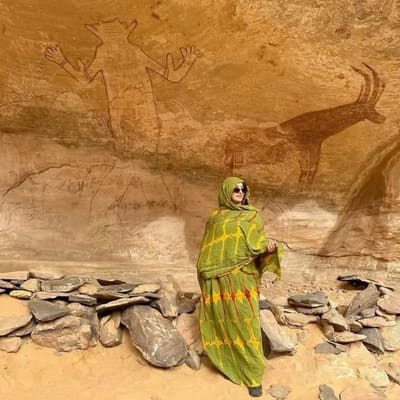
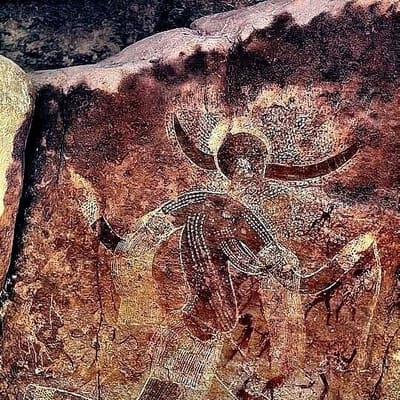
This is the serious one. From Djanet the track climbs onto the Tassili plateau, and from there everything moves at walking pace — guides, cooks and donkey handlers carrying the camp while you cover five to seven hours a day between rock-art sites. Tin Zoumaitek and the valley of millennial cypresses, the painted 'dancers' of Tin Tazarift, the masks of Sefar Noir and the great gods of Sefar Blanc, and finally Djabarren, the largest single ensemble of paintings in the Tassili. Thousands of works, recording a Sahara that was green and full of people and animals. There is no vehicle support up there and no phone signal; it is a trek, and it is the reason serious travellers come to Algeria.
Highlights
- The climb onto the Tassili plateau from Tamrit
- Tin Zoumaitek and the valley of millennial cypresses
- The painted "dancers" of Tin Tazarift
- The masks of Sefar Noir and the great gods of Sefar Blanc
- Prehistoric panels at Tirassoutine, Tin Kani and Alarendemen
- Djabarren — the Tassili’s largest ensemble of paintings
- Bivouac on the plateau every night
Why this trip is different
- The largest open-air museum in the SaharaSefar and Djabarren hold thousands of catalogued paintings spanning every period of Saharan history — a record of a green Sahara, made by the people who lived in it.
- On foot, with donkeysNo 4×4 can reach the plateau. Guides, cooks and donkey handlers move the camp; you walk between five and seven hours a day.
- Paintings you stand in front ofThe masks of Sefar Noir, the great gods of Sefar Blanc and the "dancers" of Tin Tazarift are reached on foot, with no glass and no queue.
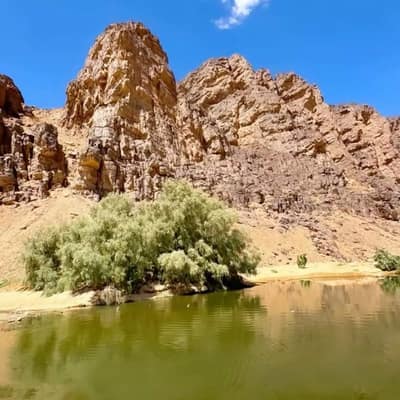
- Cypresses that predate the paintingsThe Tassili cypresses in the valley near Tamrit are among the oldest living things on earth — survivors of the wetter Sahara the paintings describe.
Day-by-day itinerary
-
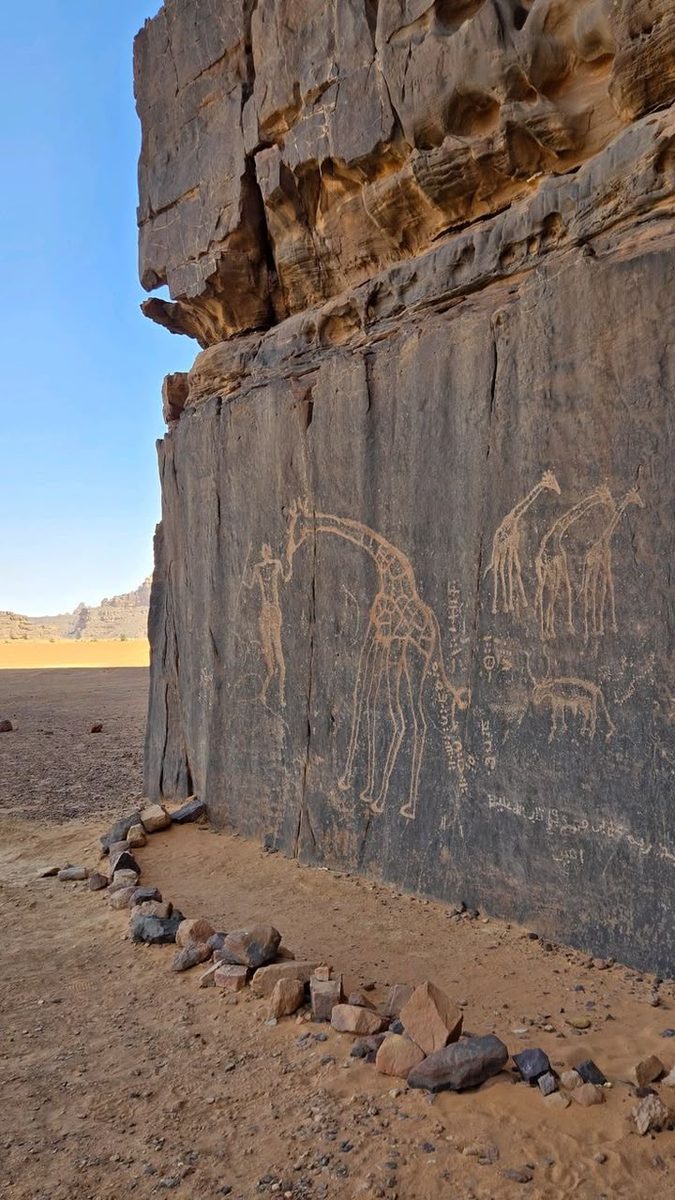 Day 1
Arrival in Djanet → Tassili du Tafilalet
Arrival at Djanet and welcome by the local team. A few hours to rest after the flight, then the transfer towards the Tassili du Tafilalet, where the expedition begins and the guides, cooks and donkey handlers who will travel with you all week are waiting.
- Djanet — The Tuareg oasis capital of the south-east, and the last town before the plateau.
- Tassili du Tafilalet — Where the vehicles stop and the walking starts.
- The trek team — The guides, cooks and donkey handlers who carry the camp and travel with you for the whole week — met on the first evening.
An arrival day — the walking begins tomorrow.
-
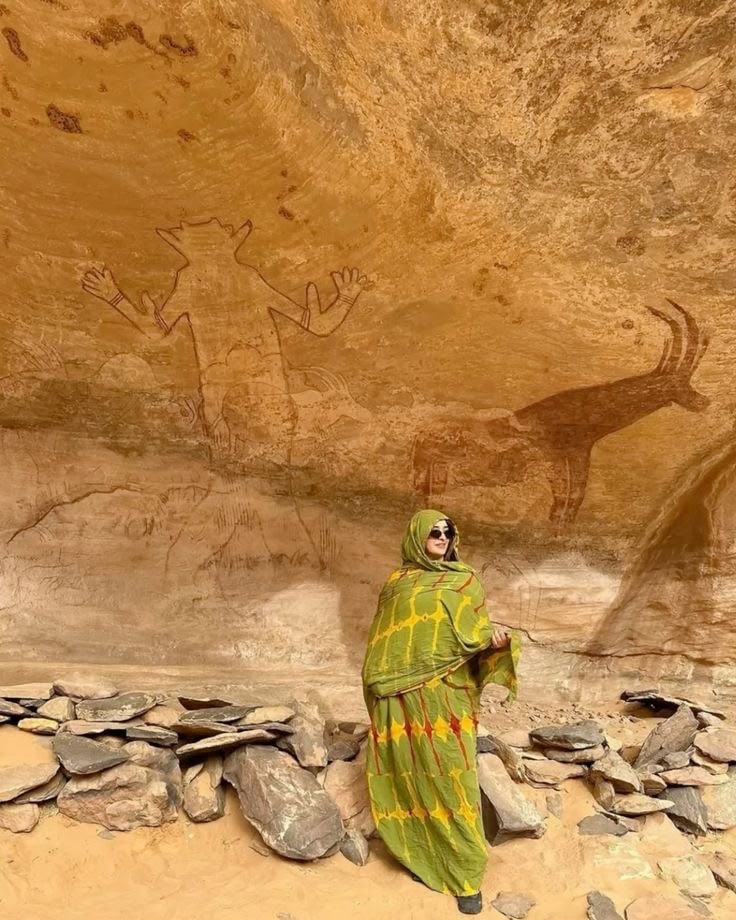 Day 2
The ascent → Tin Zoumaitek
The climb onto the Tassili plateau with the donkey teams carrying camp. At the top, the first rock-art sites at Tin Zoumaitek and the valley of millennial cypresses — genuine survivors of the wetter Sahara the paintings describe. First night in bivouac under the stars.
- The ascent — The escarpment onto the plateau: around 7 hours walking, +500 m.
- Tin Zoumaitek — The first painted sites, and the valley of thousand-year-old cypresses.
- The cypress valley — Millennial Saharan cypresses (Cupressus dupreziana) on the plateau — living survivors of the green Sahara the paintings record.
Around 7 hours walking, +500 m ascent. Bivouac.
-
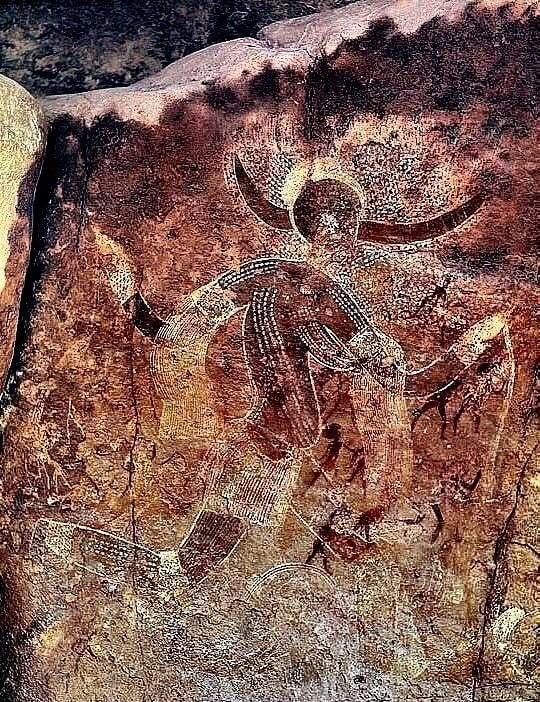 Day 3
In Tinen → Tin Tazarift
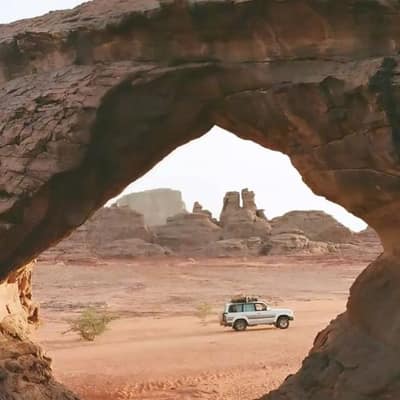
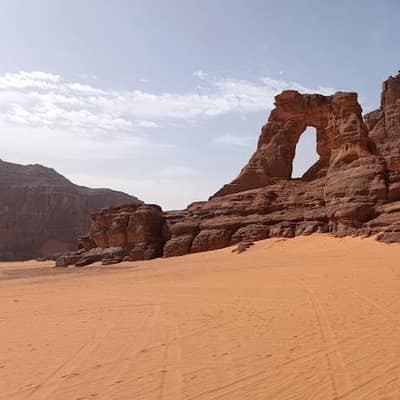
A day given to the paintings of the In Tinen needles — hunting scenes, herds, mythological figures, and unique testimony to prehistoric life. After lunch, the celebrated site of Tin Tazarift and its emblematic figures, known as "the dancers".
- In Tinen — Painted needles: hunts, herds and mythological figures.
- Tin Tazarift — The "dancers" — among the most reproduced images in Saharan art.
- Bivouac among the needles — Camp pitched among the eroded sandstone towers, with dinner cooked by the team and the plateau completely silent after dark.
5 to 6 hours walking. Bivouac.
-
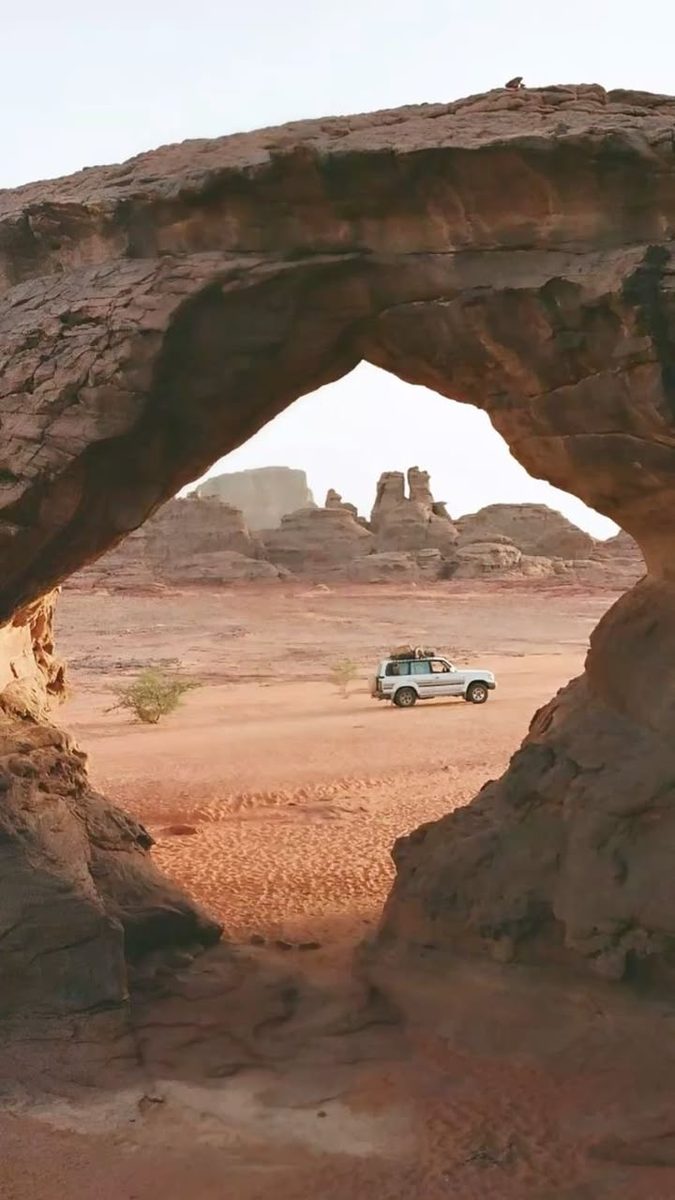 Day 4
Tin Teferieste → Sefar Noir → Sefar Blanc
The remarkable site of Tin Teferieste, then the mythical city of Sefar itself: the famous masks of Sefar Noir and the great gods of Sefar Blanc. This sector is considered one of the most impressive ensembles of rock painting anywhere in the Sahara.
- Tin Teferieste — The morning’s site on the way in to Sefar — remarkable in its own right before the famous panels.
- Sefar Noir — The masks — the images the site is known for.
- Sefar Blanc — The "great gods", among the most striking figures in Saharan art.
5 to 6 hours walking. Bivouac.
-
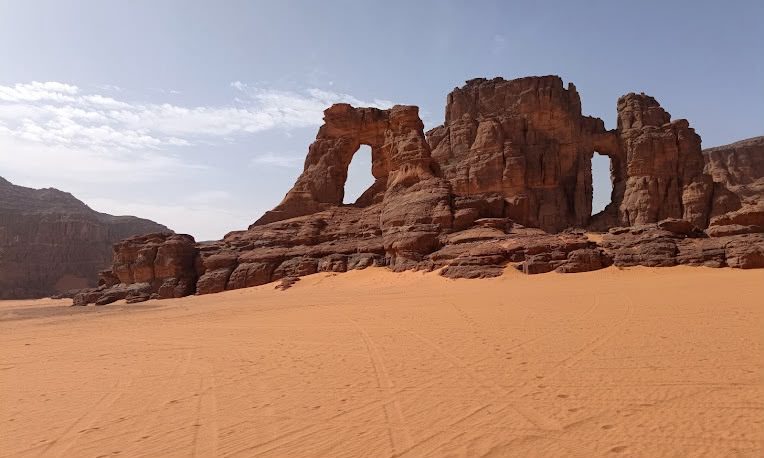 Day 5
Tirassoutine → Tin Kani → Alarendemen
The landscape changes as you go, opening into vast plateaus in darker tones. Crossing Tirassoutine and Tin Kani before reaching Alarendemen, where camp is pitched, with several remarkably preserved sets of prehistoric painting discovered along the way.
- The dark plateaus — The landscape opening out into wide tablelands in deeper tones, with well-preserved painted panels found along the crossing.
- Tirassoutine & Tin Kani — Painted panels along the crossing.
- Alarendemen — The night’s bivouac on the dark plateau.
5 to 6 hours walking. Bivouac.
-
 Day 6
Djabarren
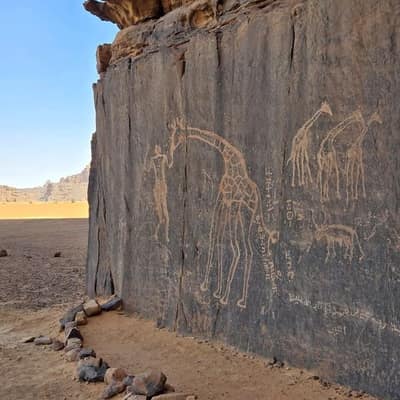
Arrival at the celebrated site of Djabarren, considered the largest ensemble of rock painting in the Tassili. Thousands of works are catalogued here, illustrating the different periods of Saharan history — an exceptional day in the middle of what is genuinely an open-air museum.
- Djabarren — The Tassili’s largest painted ensemble — thousands of catalogued works.
- Four periods on one wall — Round Head, Bovidian, Horse and Camel period works side by side — the whole sequence of Saharan history in paint.
- The last bivouac on the plateau — A final night up on the Tassili before the descent in the morning.
4 to 5 hours walking. Bivouac.
-
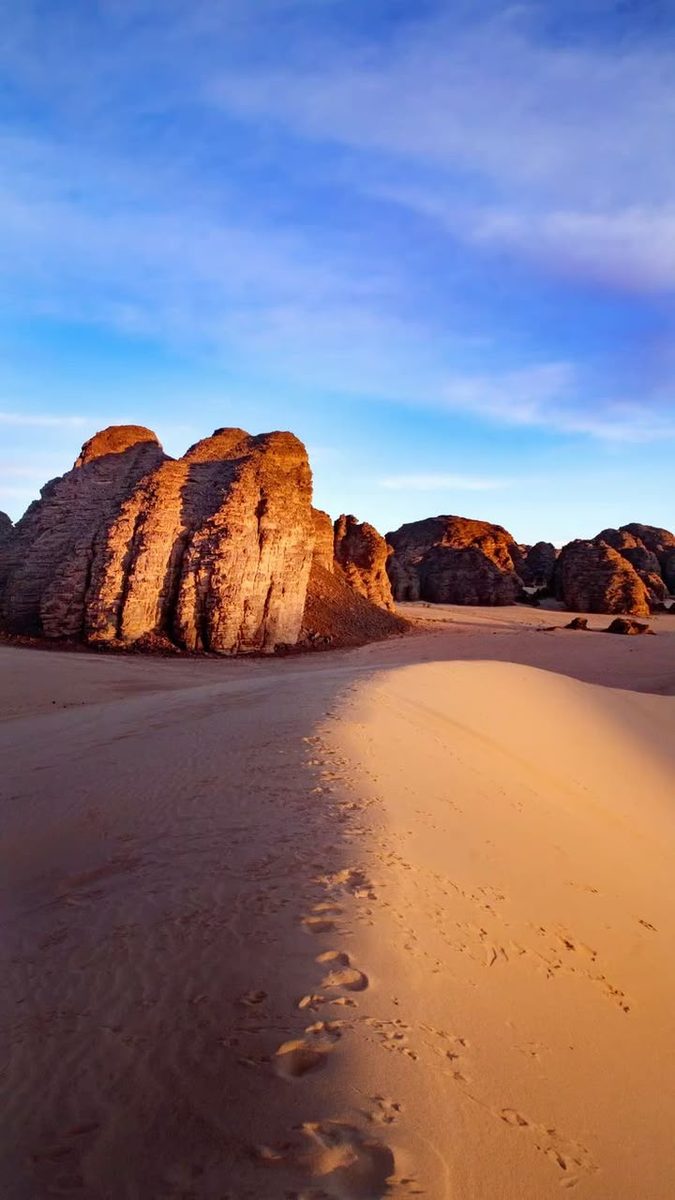 Day 7
Descent from the plateau → Djanet → home
A last morning on the Tassili, then the descent off the plateau with the guides and donkey teams — the same climb as the first day, in reverse and with a week of it behind you. Back down to the vehicles and on to Djanet, then the transfer to Tiska Airport for the flight north.
- The descent — Down the escarpment you climbed on the first day, back to where the vehicles wait.
- Djanet — A last look at the oasis before the airport.
- Tiska Airport — The transfer out of the oasis for the flight north.
A departure day: the timing follows the return flight.
What's included
- Return domestic flight Algiers ⇄ Djanet (Air Algérie, direct)
- All airport transfers — Algiers and Djanet
- Full board throughout the circuit
- Bivouac equipment and camp logistics on the plateau
- Experienced local guides, cooks and donkey handlers
- Donkeys carrying camp equipment and baggage
- Tassili n’Ajjer National Park permits and formalities
- Visa support documentation with your booking
Not included
- International flights to and from Algiers
- Algerian visa fee
- Travel and medical insurance (required)
- Drinks other than water; personal expenses
- Tips for the guide, drivers and camp crew
- Camera or drone permits where applicable
Good to know
- January: Best
- February: Best
- March: Best
- April: Best
- May
- June: Best
- July: Best
- August: Best
- September
- October: Best
- November: Best
- December: Best
- Best season
- October–April (the deep Sahara is not travelled in summer)
- Pace
- Demanding — 4 to 7 hours walking daily, +500 m ascent on the first day
- Nights
- Six nights of camp and bivouac on the plateau
- Support
- Guides, cooks and donkey handlers; no vehicle access on the plateau
- Fitness
- Regular walkers only — this is a trek, not a drive
- Connectivity
- None on the plateau
Gallery


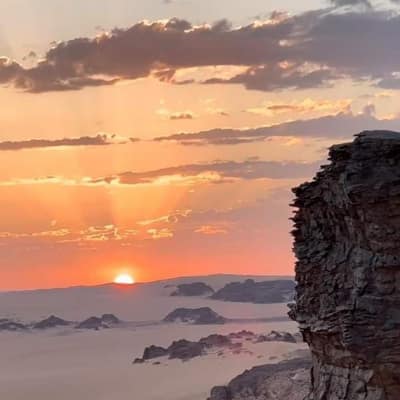
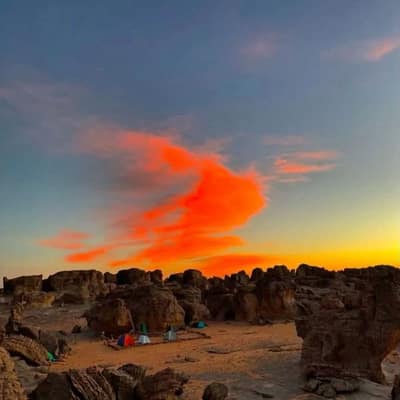
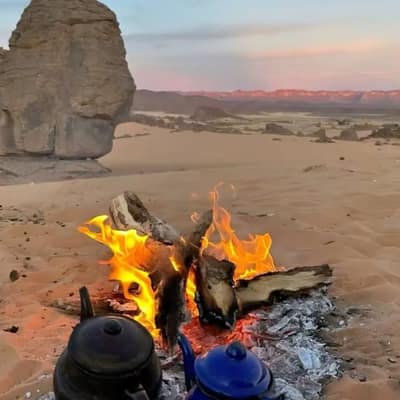

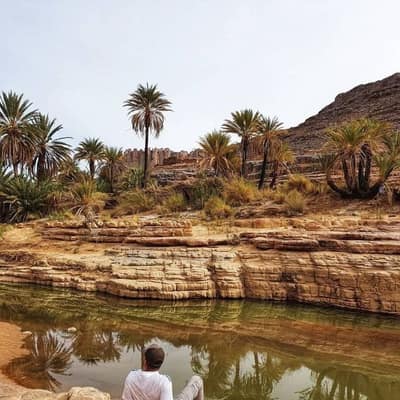
Travellers on this tour
All our reviews on Google → · Travelled with us? Leave a review
Where you'll be
Starts in Algiers (flight to Djanet included). This itinerary covers djanet.
- Djanet
- Tamanrasset
Continue exploring
States on this route: djanet
You may also like


Browse all tours, destinations, regions and experiences.
Tour FAQ
How fit do I need to be?
Fit enough to walk four to seven hours a day for six days running, starting with a 500 m ascent onto the plateau and ending with the descent. You carry a daypack only — donkeys move the camp — but there is no vehicle support and no way to shorten a day once you are up there. Regular walkers manage it comfortably; occasional walkers find it hard.
Why can’t you drive to Sefar?
The Tassili is a plateau reached by a climb, and the sites sit on top of it. That is precisely why the paintings are in the condition they are in, and why the days up there feel like nowhere else in Algeria.
How old is the rock art?
The paintings span roughly five to eight thousand years, recording a Sahara that was green and populated by people, herds and wild animals. Djabarren alone holds thousands of catalogued works across several distinct periods.
Is the flight included?
Yes — the return flight between Algiers and Djanet and all airport transfers. Your international flight to Algiers is separate.
When does it run?
October to April. The plateau is not trekked in summer.
Book this trip
From €1120 per person · 7 days · 6 nights · Sefar Trek — Into the Tassili Plateau on Foot. Send your dates and group below and we’ll confirm availability, permits and flights — usually within a few hours.
How booking works
- Request — send the form (or WhatsApp). Your dates are held free for 72 hours; no payment at this stage.
- We confirm — availability, permits, domestic flights and your final price, by email or WhatsApp.
- A 20% deposit secures it — by bank transfer, card or PayPal (we send a secure link); the balance is paid on arrival in Algeria. The price we confirm is locked.
If your visa is refused, we refund everything you paid us. Book 60+ days ahead and 5% comes off. Prefer to talk first? Message us on WhatsApp or email hello@algeriacompass.com.
Your price includes
- Return domestic flight Algiers ⇄ Djanet (Air Algérie, direct)
- All airport transfers — Algiers and Djanet
- Full board throughout the circuit
- Bivouac equipment and camp logistics on the plateau
- Experienced local guides, cooks and donkey handlers
Not included
- International flights to and from Algiers
- Algerian visa fee
- Travel and medical insurance (required)
- Drinks other than water; personal expenses
Your booking request
Thank you — your request is on its way.
We've emailed your details to our team and will reply within a few hours. Prefer to chat now? Message us on WhatsApp.