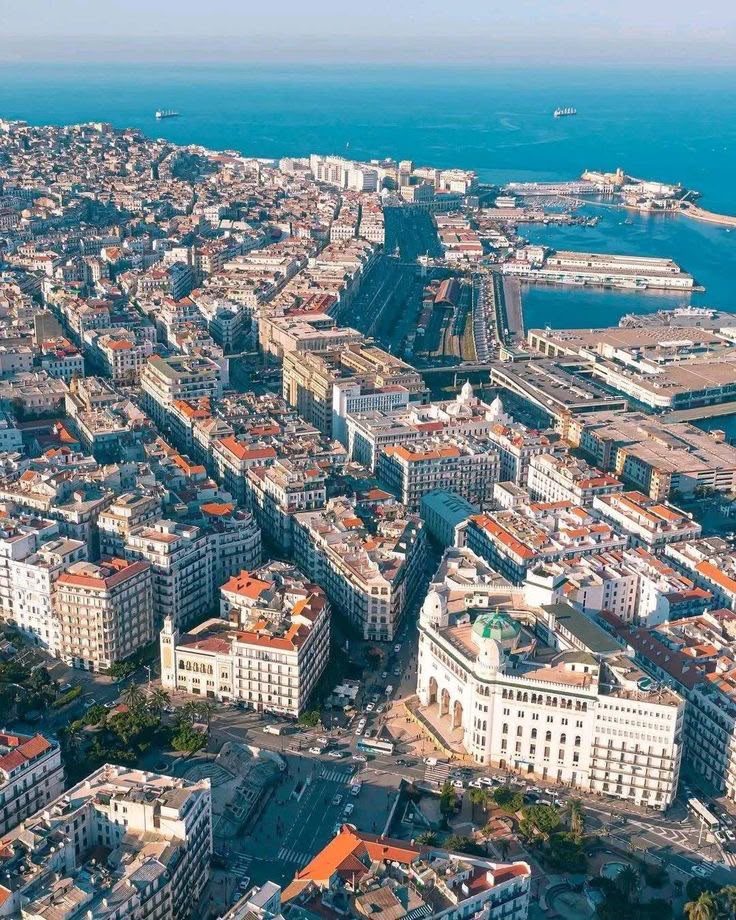
Explore Algeria in Elite Luxury
Private, locally-guided journeys across Algeria — Sahara, the UNESCO Casbah, Roman cities, the M'Zab and the coast.


Featured tours

Djanet Sahara Safari — 5-Day Tadrart Rouge
Five days in the most beautiful desert on Earth — blood-red sandstone, golden dunes and 10,000-year-old art, guided by the Tuareg who have always called it home.
- Licensed Algerian operator
- Free cancellation up to 5 days before

Algiers Full-Day — Casbah, Bardo & Martyrs' Memorial
A full day through the white city — the Ottoman Casbah, a great museum, and the monument that crowns Algiers, with a real Algerian lunch in between.
- Licensed Algerian operator
- Free cancellation up to 5 days before

Roman Algeria — Tipaza, Djémila & Timgad (3 Days)
Three days, three of the greatest Roman cities on Earth — by the sea at Tipaza, on the hillside at Djémila, and across the grid of Timgad.
- Licensed Algerian operator
- Free cancellation up to 5 days before

Béjaïa — Historic City by the Sea (Day Trip)
A Mediterranean day in Kabylie — a clifftop fortress, the wild Cap Carbon corniche, and a beach lunch where the mountains meet the sea.
- Licensed Algerian operator
- Free cancellation up to 5 days before

Ghardaïa — 3-Day M'Zab Valley Tour
Three days in the M'Zab — the thousand-year-old hill-towns of the Mozabites, their secret water channels, and a night in the open desert.
- Licensed Algerian operator
- Free cancellation up to 5 days before

Western Algeria: Oran, Mostaganem & Tlemcen (5 Days)
Five days across the Algerian west — raï-city Oran, the beaches of Mostaganem, and the deep Andalusian soul of Tlemcen.
- Licensed Algerian operator
- Free cancellation up to 5 days before
Luxury Algeria, privately yours
Three signature, all-inclusive 8-day journeys — Roman ruins, UNESCO cities, the Sahara and the Andalusian west. Internal flights, 5-star hotels, private 4WD. From €1,615 / person.
Discover the journeys →Plan your Algeria trip
Six ways into Algeria — pick a thread and pull.
Civilisations of Algeria
Eight civilisations layered over three thousand years — Amazigh, Saharan, Mozabite, Roman, the first Islamic kingdoms, Andalusian, Ottoman and modern. Choose one to explore its states and the journeys that reach it.

Amazigh
Long before Rome or Islam, the Imazighen — the 'free people' — held these mountains and oases and gave the land its oldest living language, Tamazight. Their script, silver, pottery and the Yennayer new year endure, strongest in Kabylie and the Aurès.
Tifinagh script and Berber pottery patterns are over 3,000 years old.

Tuareg & Sahara
The deep south belongs to the Tuareg — the blue-veiled caravan people — and to a Sahara of vast dunes and rock-art plateaus. At Tassili n’Ajjer, thousands of paintings record a green Sahara that vanished millennia ago.
Tassili n'Ajjer holds ~15,000 rock paintings, older than the pyramids.

Mozabite M'Zab
In a dry valley of the northern Sahara, the Ibadi Mozabites raised five fortified white towns around watchtower-minarets. Their austere, ingenious urbanism has survived a thousand years — and shaped modern architecture.
The M'Zab's cubist architecture inspired Le Corbusier; UNESCO since 1982.

Numidian & Roman
Before and during Rome, the Numidian kings and then the empire raised cities across the fertile north. Djémila, Timgad and Tipaza survive as some of the best-preserved Roman cities anywhere — forums, theatres and mosaics standing in open country.
Djémila and Timgad are among the best-preserved Roman cities on Earth.

Islamic-Berber Dynasties
From the 10th century, Berber Muslim dynasties — Hammadid, Zirid and others — founded the first kingdoms of the central Maghreb, leaving brick minarets and ruined capitals across the high country.
The Qal'a of Beni Hammad, first Hammadid capital, is UNESCO-listed (1980).

Andalusian
When Muslims and Jews were expelled from Spain, many settled in Tlemcen, Oran and the western cities, bringing Andalusian music, zellige tilework and refined architecture. Tlemcen, the Zianid capital, became their great refuge.
Tlemcen was the Zianid capital and a refuge for the exiles of Al-Andalus.

Ottoman Algiers
For three centuries Algiers was the seat of Ottoman power in the Maghreb — a corsair city-state above its bay. Its legacy is clearest in the UNESCO-listed Casbah, a steep maze of palaces, mosques and Ottoman houses.
For 300 years Algiers led Ottoman Barbary; its Casbah is UNESCO-listed.

Modern Algeria
Modern Algeria was forged in its mountains — above all the Aurès, where the 1954 war of independence began. This is the Algeria of resistance, of high plateaus and young cities, and of a republic still being written.
The Aurès mountains lit the spark of the 1954 war of independence.

And the table that ties them together
Six civilisations meet on one plate — couscous, rechta, chorba, fresh bread and mint tea. Explore the food of Algeria.
A sweet finish
Baklawa, makroud, qalb el louz, kaab el ghzal — the honeyed, almond-rich pastries of Algeria’s celebration tables.


Real journeys, real travellers
Unscripted photographs from recent Algeria Compass guests — coast, cities and the deep Sahara. Every face here travelled with us.


Reviews from our travellers
Real, verified reviews from people who travelled with us. We publish each one only after we’ve confirmed it — so what you read here is genuine.
5.0 5.0 on Google — from 9 five-star reviews · read them on Google →Loading reviews…
Curious about Algeria — but not sure who to trust?
Fair. Here are straight answers to the questions that actually keep people from booking — no spin, no invented reviews.
Safety & welcome
Is Algeria actually safe to visit?
Yes. The north — Algiers, the coast, the Roman cities, Kabylie — is calm, and Algerians are famously hospitable to the few foreigners who come. You take the ordinary precautions of any new country. The deep south and borders are restricted, and we only travel them with permits and licensed guides.
Will I actually be welcome as a foreign tourist?
More than welcome. Algeria sees a tiny fraction of its neighbours’ visitors, so you arrive as a guest, not a number — expect curiosity, invitations to tea, and very little hassle.
Is it safe for solo and women travellers?
Generally yes, with modest dress and normal awareness; serious harassment is uncommon. Travelling privately with a local guide removes most of the friction women tell us they worry about.
Visa & entry
Do I need a visa, and is it hard?
Most nationalities need a tourist visa from an Algerian consulate before travel — and consulates require an invitation letter from a licensed Algerian agency. That is exactly the part we handle for you: the letter costs $25 and comes with any programme of at least 3 days that includes airport pickup and drop-off.
Is there an e-visa or visa on arrival?
Not for ordinary tourism. The main exception is an organised trip that includes the Sahara: we file your details in advance and the visa is issued on arrival at Algiers airport. We tell you honestly which route applies — and never promise what the rules don’t allow.
Why Algeria feels “hard” — and how we remove it
Why does planning Algeria feel so difficult?
Because information is thin, English is patchy, the desert needs permits, and you can’t just book everything online. That gap is the whole reason we exist: one licensed operator handling visa paperwork, permits, flights, guides and logistics so you don’t stitch it together yourself.
Can’t I just do it independently?
In the north, with patience, yes — and we’ll say so. The Sahara, no: protected zones legally require a licensed operator, a 4x4 and permits. We’re upfront about where you need us and where you don’t.
What if something goes wrong on the ground?
You have a named local team and guide for the whole trip, reachable on WhatsApp. Nothing is “confirmed” until availability, transport and permits are actually checked — so what we promise is real.
Money, language & daily life
Can I pay by card, or is it cash?
Algeria runs on cash. Cards work in a few city hotels and foreign-card ATMs are unreliable, so bring euros or dollars to exchange on arrival. We’ll tell you roughly how much to carry.
What languages will I get by in?
Arabic and Tamazight are everyday, French is widely spoken, English less so outside tourism. Our guides bridge the gap in all four.
What’s daily life like for a visitor?
Relaxed, social and a little improvised. SIM cards are cheap, cities have wifi, the desert is gloriously off-grid — and you should stick to bottled water.
What to see & how long
How long do I really need?
A long weekend covers Algiers and the Roman coast. A week adds the M’Zab Valley or a Sahara leg. Ten days lets you cross from the Mediterranean to the dunes. Every tour page lists exactly what’s included.
First trip — where should I go?
Most first-timers love the mix of the UNESCO Casbah of Algiers, the Roman cities (Tipaza, Djémila, Timgad) and a few nights of Sahara at Djanet or Timimoun. We tailor it to your dates and pace.
When should I come?
Spring and autumn for the north; November to February for the Sahara. We plan around the seasons and Ramadan so the trip actually works.
Why we’re legitimate
Who are Algeria Compass, exactly?
A licensed Algerian tour operator, run by locals, specialising only in Algeria — not a reseller bolting Algeria onto a global catalogue. The visa paperwork we issue is the kind consulates accept.
Why trust you over a random online listing?
Because we put our licence, our local guides and our real itineraries and prices in front of you, we confirm every trip by hand, and we’d rather tell you a hard truth than oversell. We’ve worked in Algerian tourism for over seven years and hold a 5.0 rating from genuine five-star reviews on Google — both shown in the badges above, and the rating links straight to the source.
Ready to see Algeria?
Tell us your dates and interests — we'll craft a private itinerary.