Tadrart Rouge, Ihrir or Sefar? Choosing a Djanet Trip (2026)
September 2026 · 7 min read
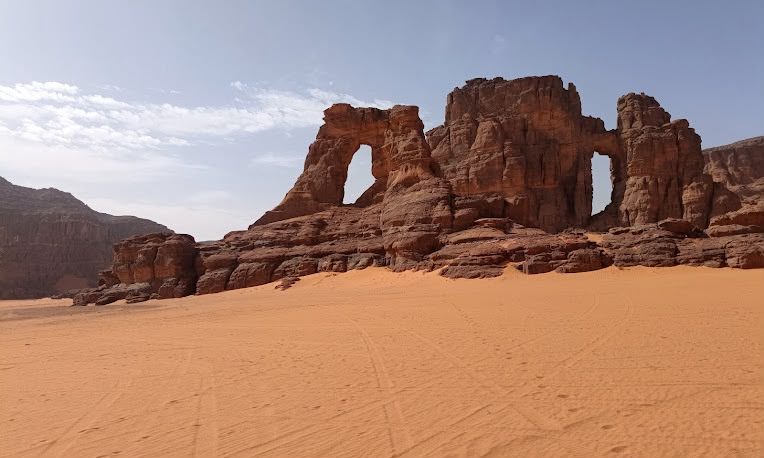
From Djanet there are three very different Sahara trips. The Tadrart Rouge is the classic: pink dunes, stone arches and rock engravings, by 4×4 with six nights of bivouac. Ihrir is the greener Tassili: permanent pools, canyons and dunes, also by 4×4. Sefar is a walking expedition onto the Tassili plateau to the Sahara's greatest gallery of prehistoric painting, 4–7 hours a day on foot. All three are 7 days from Algiers with the flight included: Tadrart and Ihrir from €920, Sefar from €1,120 per person.
Djanet is the gateway to the deepest, most beautiful part of the Algerian Sahara — and once you have decided to go, the next question is which Djanet. We run three week-long journeys from there, each with the return flight from Algiers included, and they are genuinely different trips. Here is how to choose. (Still deciding between Djanet and the oasis country further west? Read Djanet or Timimoun first.)
The short answer
- Tadrart Rouge — 7 days: the classic. Pink dunes, stone arches and famous engravings, by 4×4, with six nights of bivouac. From €920.
- Ihrir & the Tassili — 7 days: the surprise. Permanent pools, a canyon you can sometimes swim in, dunes and wind-carved rock, by 4×4. From €920.
- Sefar Trek — 7 days: the expedition. On foot onto the Tassili plateau, to the greatest open-air gallery of prehistoric painting in the Sahara. From €1,120.
Tadrart Rouge: the Sahara of the photographs
The Tadrart lies south-east of Djanet toward the Libyan border, and it is what most people picture when they think of the Sahara: rose-coloured sand against black and red rock. Over a week you move camp every evening — the gorges of El Berdj, the dunes of Moul Naga, the great sand sea of Erg Tin Merzouga for sunset, the arches around Ajelati and the sandstone “cathedral” of Tamezguida.
It is not only landscape. The giraffes and elephants engraved at Tin Abadène, and the “Crying Cow” of Tigharghart, are among the most famous rock art in Africa — and you walk right up to them.
Ihrir: a Sahara with water in it
Ihrir is a sunken oasis on the Tassili where the water never dries up: permanent gueltas with reeds and green around them. The week continues through the dunes of Erg Admer, the canyon of Oued Essendilène (swimming, in season), the wind-carved towers of Tikoubaouine, and Adaik — known locally as the “little Sefar” for its rock art. The first night is in a guesthouse in Djanet; the other five are in bivouac.
Choose it if you have seen dunes before, or if you want the widest range of landscapes in a single week.
Sefar: on foot to the painted walls
No vehicle can reach the top of the Tassili plateau. You climb to it from Tamrit — about 500 metres of ascent on the first day — with guides, cooks and donkey handlers carrying the camp, and then walk four to seven hours a day between rock shelters painted five to eight thousand years ago: the “dancers” of Tin Tazarift, the masks of Sefar Noir, the great figures of Sefar Blanc, and Djabarren, the largest ensemble of paintings on the Tassili. Near Tamrit, the ancient Tassili cypresses are survivors of the wetter Sahara the paintings describe.
It is the most rewarding of the three, and the only one that asks something of your body. It is for regular walkers.
Short on time?
The Djanet Sahara Safari is a 5-day taste of the Tadrart with desert camps and a Tuareg guide, from €828, starting and ending in Djanet (the flight is not included).
Practical notes for all three
- Season: October to April; November to February is clearest and coolest. The deep south is not travelled in summer.
- Nights: cold in winter — close to freezing. Bring real warm layers.
- Signal: none once you leave Djanet.
- Permits: Tassili n’Ajjer park permits are arranged by us and included.
- Entry: the visa routes for the Sahara, including Djanet, are explained on our entry and e-Visa page.
Not sure which suits you? Tell us how you like to travel and we will say honestly which one fits — or build a journey that combines two.
Common mistakes
- Booking Sefar because it sounds the most impressiveIt is — but it is a trek with a steep climb on the first day. If you do not walk regularly, choose the Tadrart or Ihrir, which both include rock art.
- Thinking the Tadrart has no rock artIt has some of the most famous engravings in the Sahara — the giraffes of Tin Abadène and the 'Crying Cow' of Tigharghart.
- Expecting phone signalThere is none once you leave Djanet. Tell people at home before you go.
| Tadrart Rouge | Ihrir & the Tassili | Sefar Trek | |
|---|---|---|---|
| What it is | Dunes, arches and engravings | Oasis pools, canyons and ergs | Painted rock shelters on the plateau |
| How you travel | 4×4, short walks | 4×4, short walks | On foot, 4–7 hours a day |
| Nights | 6 nights wild bivouac | 1 guesthouse + 5 bivouac | 6 nights on the plateau |
| Fitness | Comfortable | Comfortable | Demanding — regular walkers only |
| Signature moment | Sunset from the Erg Tin Merzouga | The gueltas of Ihrir | The masks and 'gods' of Sefar |
| From, per person | €920 | €920 | €1,120 |
Key facts
| Most iconic landscapes | Tadrart Rouge |
| Water in the desert | Ihrir |
| Best rock paintings | Sefar (on foot) |
| Price, 7 days from Algiers | €920 / €920 / €1,120 per person |
| Flight Algiers ⇄ Djanet | Included on all three |
| Season | October to April |


