Overview
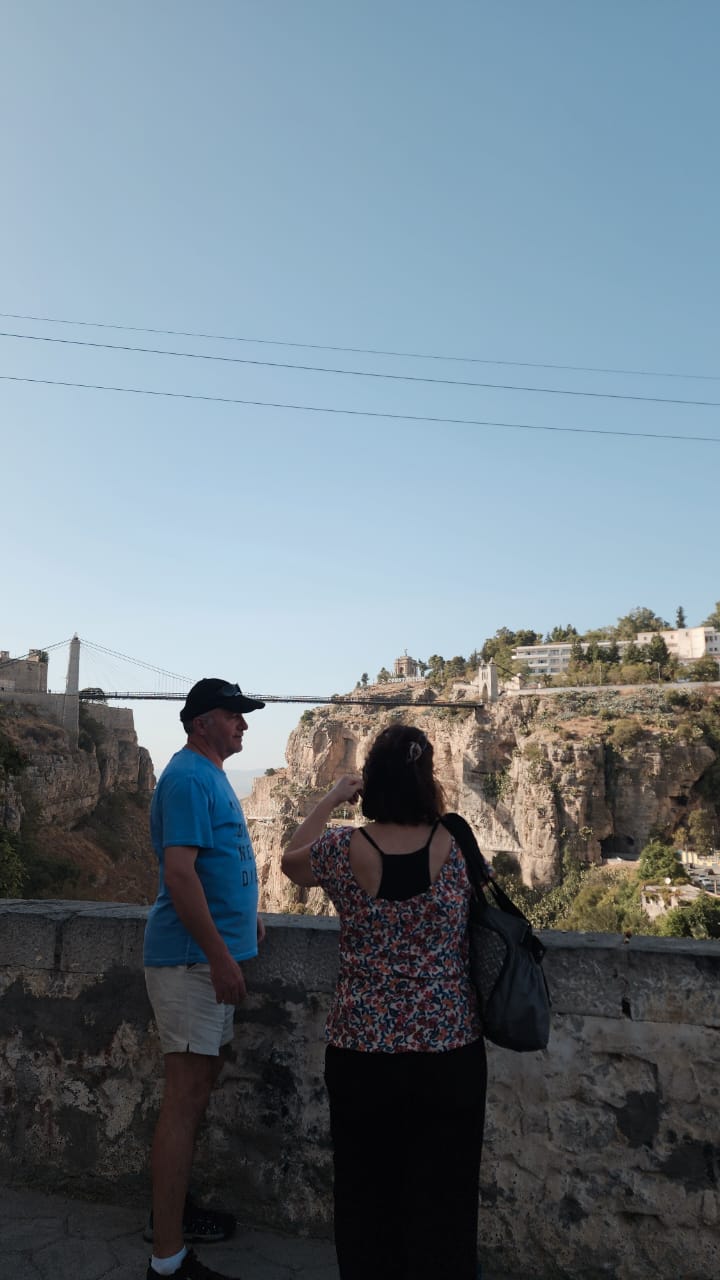
Few cities have a setting like Constantine. The old town stands on a rocky plateau cut almost entirely away by the Rhumel gorge, leaving it ringed by sheer cliffs and joined to the modern city by a series of bridges — among them the vertiginous Sidi M’Cid suspension bridge, slung high above the river. That drama is the city’s signature, but its deeper story is one of three thousand years of history and a living urban culture. (To plan a visit — flights, timing, itineraries — see the Constantine travel guide.)
History — Cirta, Rome & the Ottomans
Constantine is one of the oldest continuously inhabited cities on earth. As ancient Cirta it was the capital of the Berber kingdom of Numidia under King Massinissa, then a major city of Roman Africa; it was rebuilt by the emperor Constantine the Great in the 4th century, who gave it the name it still carries. Under the Ottomans it became a powerful provincial seat and a centre of learning, and the early-19th-century rule of Ahmed Bey left the city its finest palace.
The bridges
The crossings of the Rhumel gorge are engineering heritage in their own right: the high Sidi M’Cid suspension bridge, the Mellah Slimane footbridge slung between cliff faces, and the Pont d’El Kantara. Streets end at the lip of the ravine and resume on the far side hundreds of metres above the water — a cityscape unlike any other in North Africa.
The Palace of Ahmed Bey
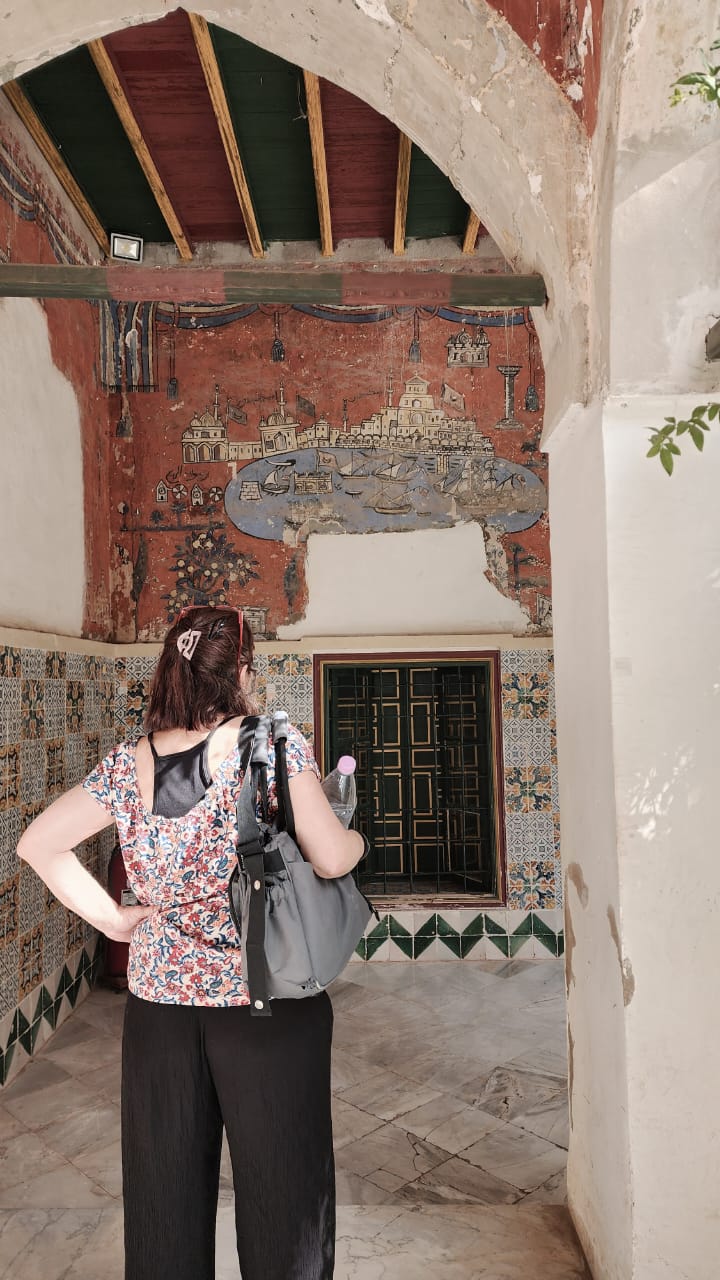
The restored Palace of Ahmed Bey is among the finest Ottoman-era residences in Algeria — a sequence of painted galleries, tiled courtyards and gardens built in the 1830s, its walls covered with naïve frescoes of the places and pilgrimages its builder had seen.
Malouf — the city’s music
Constantine is the great Algerian home of malouf, the classical Andalusian music brought east from Spain and nurtured in the cities. Refined, devout and proud, malouf is woven into weddings, festivals and the city’s sense of itself; Constantine’s conservatoires and families have kept the tradition alive for generations.
The old medina & mosques
The old medina climbs the rock in a maze of Ottoman quarters, and the Emir Abdelkader Mosque — one of the largest in the country — anchors the modern city. The Monument aux Morts, set on the cliff edge, gives the classic panorama back across the gorge.
Cuisine & sweets
Constantine is famous for eastern Algerian cooking and especially its pastries and sweets — refined, often almond- and honey-based — alongside its versions of classic Algerian grills and stews. Food here is part of the city’s urbane identity.
Beyond the city
Constantine sits at the heart of the Roman north-east, within reach of Djémila and Timgad and the museums of Sétif — see the Constantine travel guide to plan the loop, and the Constantine region guide for the wider east.
Explore it with us
Constantine anchors our eastern itineraries. Travel it with the City of Bridges expedition, plan the trip via the Constantine travel guide, or browse all of our private guided tours. Every trip runs with licensed Algerian guides.
Planning the wider trip? For the surrounding state — how to base yourself, what else is nearby and how to get around — see our Constantine state guide.