


Algeria Grand Discovery — 14 Days, Coast to Sahara
Most people choose between Roman Algeria and the Sahara. Fourteen days is what it takes to stop choosing.
Guided in English by our own English-speaking guides — not a translator · How it works
Overview
This is the whole country in one journey, sequenced so that every internal flight is a scheduled direct service — no transits, no lost days in airports. You begin in Algiers and fly the same night to Djanet for a four-day 4×4 expedition into the Tadrart Rouge, sleeping two nights in the desert. Then the Roman east: Constantine on its gorge, Timgad, Annaba and Djémila. Back to the capital for the Casbah and the Bardo, west to Tipaza and Cherchell, and finally south again to Ghardaïa for the five fortified towns of the M’Zab and the Sebseb dunes. Six UNESCO World Heritage sites, four direct flights, thirteen nights, and a national guide with you throughout.
Highlights
- Four days in the Tadrart Rouge with two desert camps
- The UNESCO Casbah of Algiers and the Bardo Museum
- Timgad — the "Pompeii of Africa"
- Djémila, set 900 m up on a mountain spur
- Constantine, the City of Bridges, over the Rhumel gorge
- Tipaza and the Royal Mausoleum of Mauretania
- The five fortified ksour of the M’Zab Valley
- The Sebseb dunes south of Ghardaïa
- Saint Augustine’s basilica and Hippo Regius at Annaba
Why this trip is different
- Six UNESCO sites in one itineraryThe Casbah of Algiers, Tipaza, Djémila, Timgad, the M’Zab Valley and the Tassili n’Ajjer — the full set of Algeria’s headline heritage, plus the Sahara.
- Every internal flight is directFour scheduled Air Algérie services, no transits and no connections. The route is built around the flight schedule rather than fighting it.
- A real desert expedition, not a day tripFour days in the Tassili n’Ajjer with two nights of wild camping, licensed Tuareg guides and a dedicated expedition cook.
- Two weeks means no forced marchThree nights in Constantine, three in Algiers, two in Ghardaïa — enough time in each place to do it properly.
Day-by-day itinerary
-
 On to The Sahara — Tassili & the Tuareg South
-
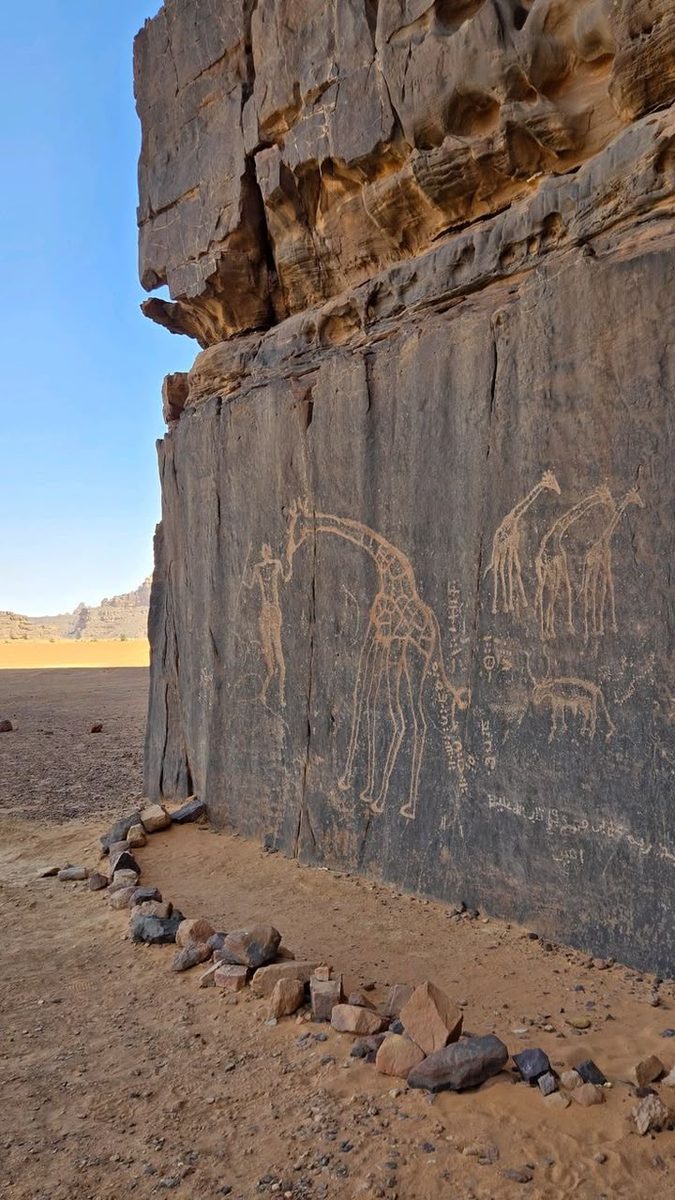 Day 1 · Algiers → The Sahara
Arrival in Algiers → night flight to Djanet
Arrival at Houari Boumediene Airport, met by our representative, with a day-use room to freshen up. An afternoon orientation walk — Martyrs’ Square, the Grande Poste, the seafront — then an early dinner and the transfer to the domestic terminal for the direct night flight south.
- Houari Boumediene Airport — Met by our representative, with a day-use room to shower and change after the international flight.
- Martyrs’ Square and the Grande Poste — The square at the foot of the Casbah and the 1910 neo-Moorish post office — the two landmarks of central Algiers.
- The seafront arcades — The long white colonnade above the harbour, the image of Algiers seen from the sea, before the transfer for the night flight south.
Direct evening flight Algiers → Djanet.
-
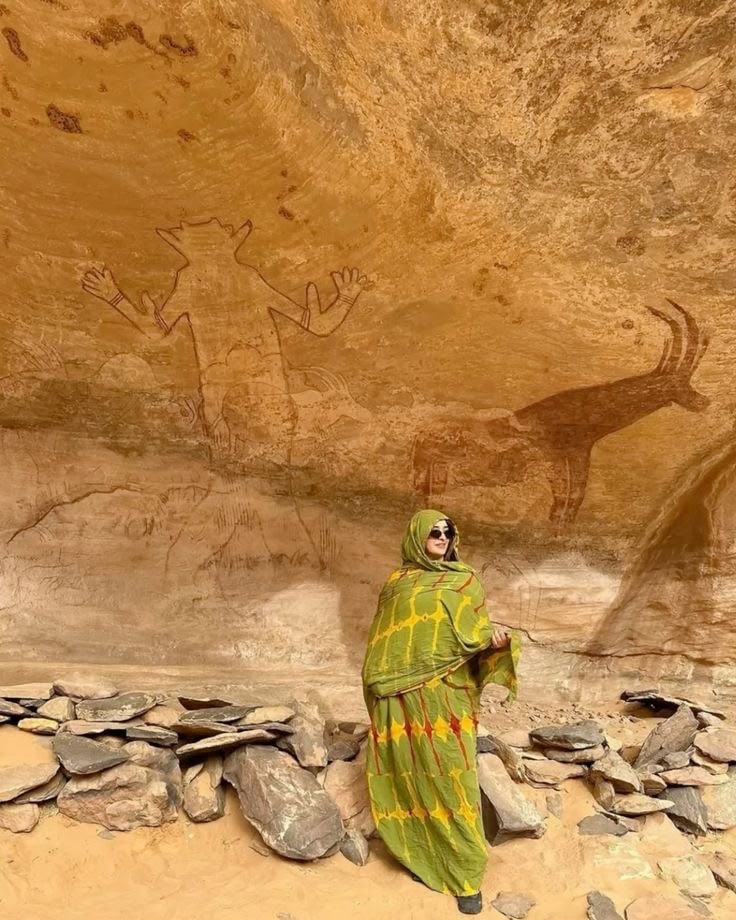 Day 2 · The Sahara
Tigharghart & the Tadrart Rouge
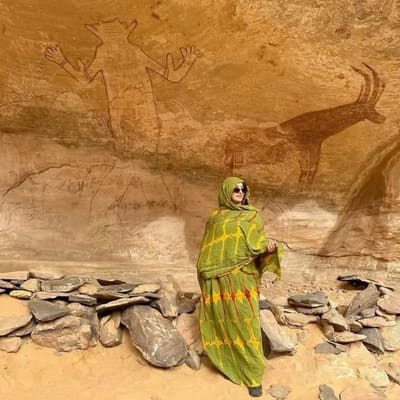
Meet your licensed Tuareg guide and head out by 4×4 into the Tadrart Rouge, in the Tassili n’Ajjer National Park. Tigharghart, home of the world-famous "Crying Cow" engraving, then on through giant red dunes and sandstone formations to the deep-desert camp. Traditional Tuareg dinner under the stars.
- Tigharghart — The "Crying Cow" — the most famous engraving in the Sahara.
- The Tadrart Rouge — Giant red dunes and sandstone towers inside the Tassili n’Ajjer National Park, crossed by 4×4 with a licensed Tuareg guide.
- The deep-desert camp — A traditional Tuareg dinner cooked on the fire, and the first night out under the stars.
-
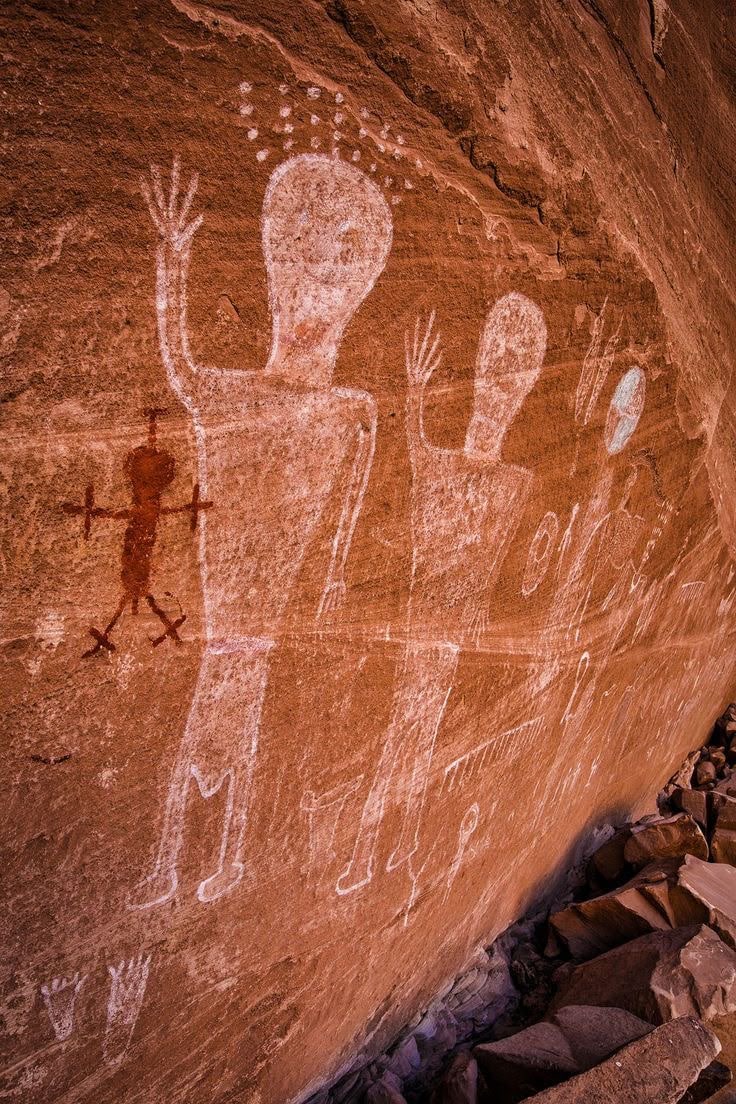 Day 3 · The Sahara
The heart of the Tadrart
A full day among the great landscapes of the Tadrart Rouge: El Berdj, Moul Naga and the Erg Tin Merzouga, with prehistoric engravings and panoramic viewpoints along the way. Sunset in the middle of the Sahara and a second night of wild camping.
- El Berdj — Deep sandstone gorges whose walls carry both engravings and painted panels.
- Moul Naga — Majestic dune country in the middle of the Tadrart, and the day’s panoramic viewpoints.
- Erg Tin Merzouga — The great dunes of the Tadrart at sunset.
-
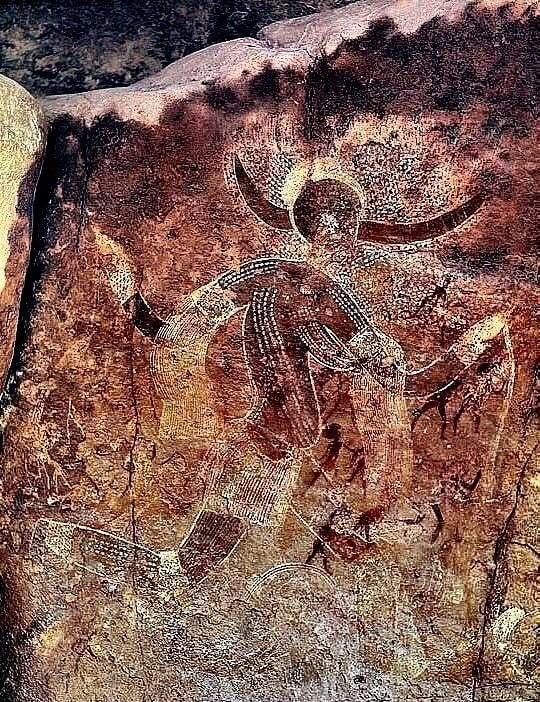 Day 4 · The Sahara
In Djaren, Tin Abadène & Ouanahare → Djanet
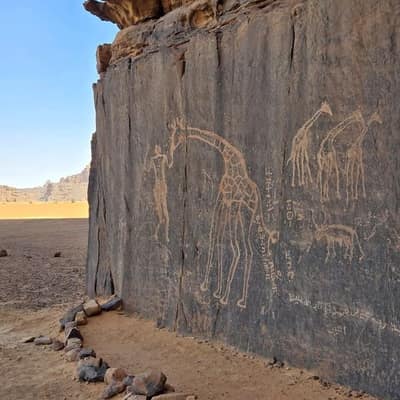
Deeper into the park: the In Djaren valley, the giraffes and elephants engraved at Tin Abadène, Ouanahare, the Tamezguida "cathedral" and the natural arches. Back to Djanet after sunset.
- The In Djaren valley and its arches — A dry valley of monumental wind-cut sandstone arches — the Tadrart’s signature formations.
- Tin Abadène — Prehistoric giraffes and elephants.
- Tamezguida — A sandstone formation that earns the name "cathedral".
-
 On to Constantine & the East
-
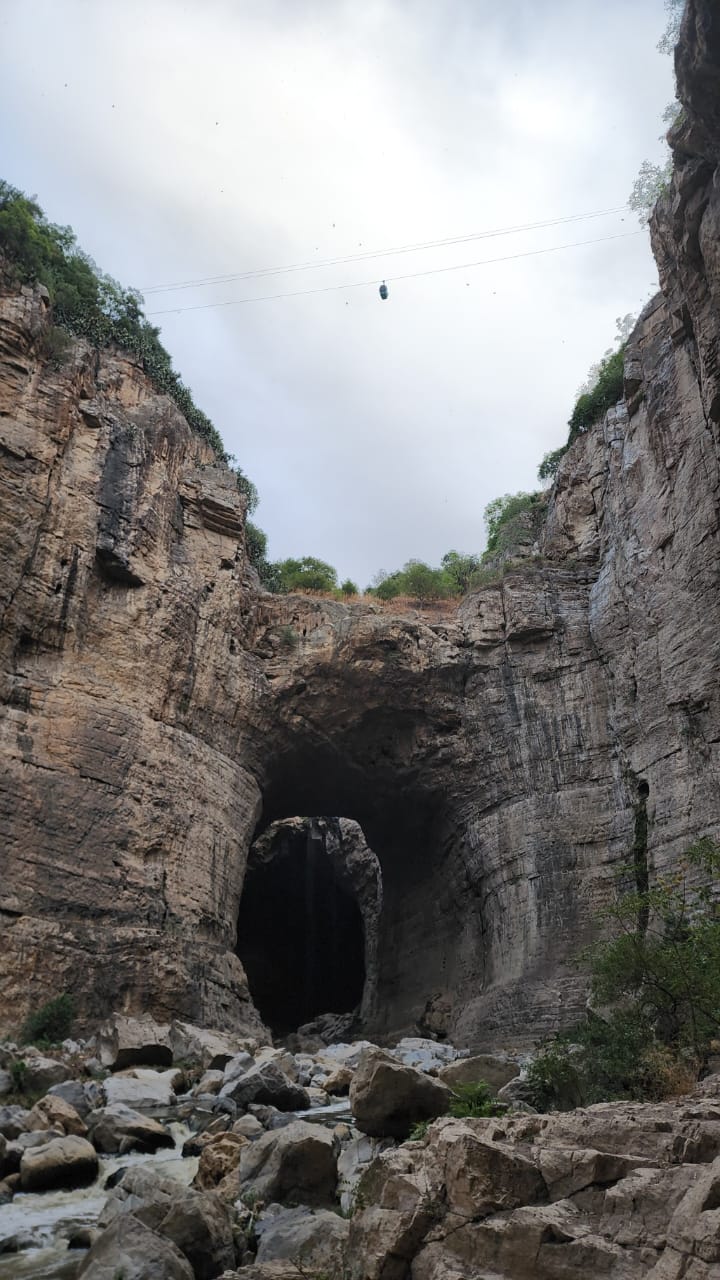 Day 5 · The Sahara → Constantine
Djanet → night flight to Constantine
A morning of Tuareg Djanet: the Tassili Museum — the only Tuareg museum in Algeria — the old ksar of Azellouaz and the local market, with free time for souvenirs. A farewell-to-the-Sahara dinner, then the late transfer to Tiska Airport.
- The Tassili Museum — The only Tuareg museum in Algeria — rock-art records, jewellery, weapons and the daily life of the Kel Ajjer.
- The ksar of Azellouaz — Djanet’s oldest quarter, a mud-brick village stacked on the rock above the palmeries.
- Djanet market — The oasis market for Tuareg silver, leather and dates, with free time for souvenirs before the farewell dinner.
Direct night flight Djanet → Constantine (weekly service).
-
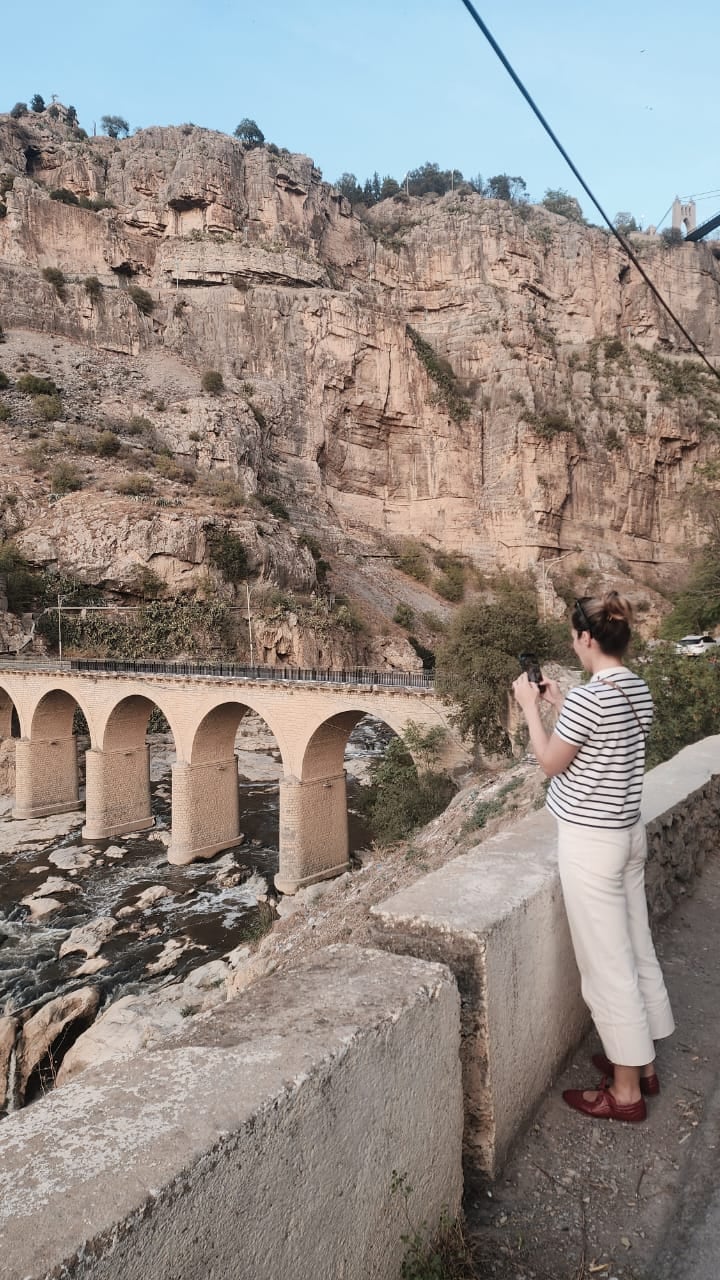 Day 6 · Constantine
Constantine, City of Bridges
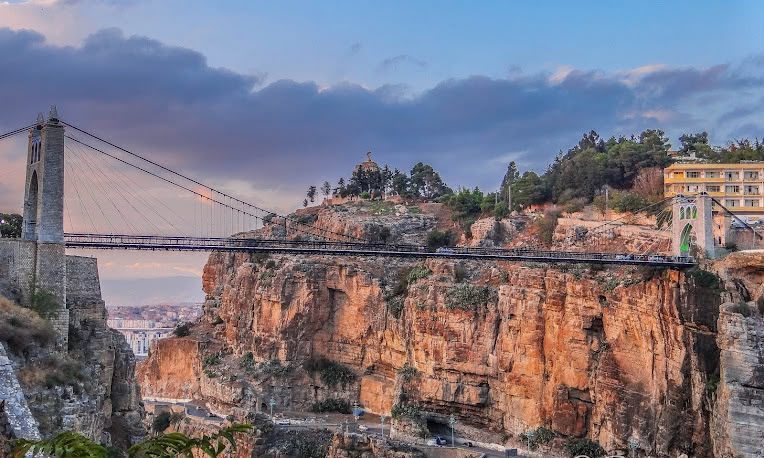
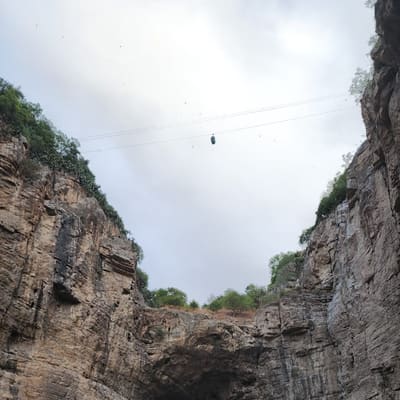
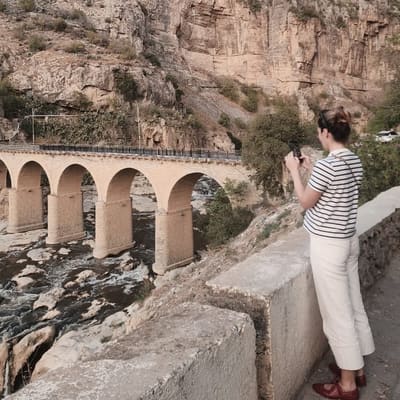
A relaxed late start after the night flight, then the city: the Palace of Ahmed Bey, the Cirta National Museum, the Sidi M’Cid suspension bridge and the Mellah Slimane footbridge, the Place des Martyrs and the old town, and the viewpoints over the Rhumel gorge.
- Sidi M’Cid Bridge — Slung high above the Rhumel gorge — the signature image of Constantine.
- Ahmed Bey Palace — The painted galleries and courtyards of the last Bey.
- The Cirta National Museum and the old town — Constantine’s archaeology and fine-art collection, the Place des Martyrs and the viewpoints over the Rhumel gorge.
-
 On to Roman Algeria
-
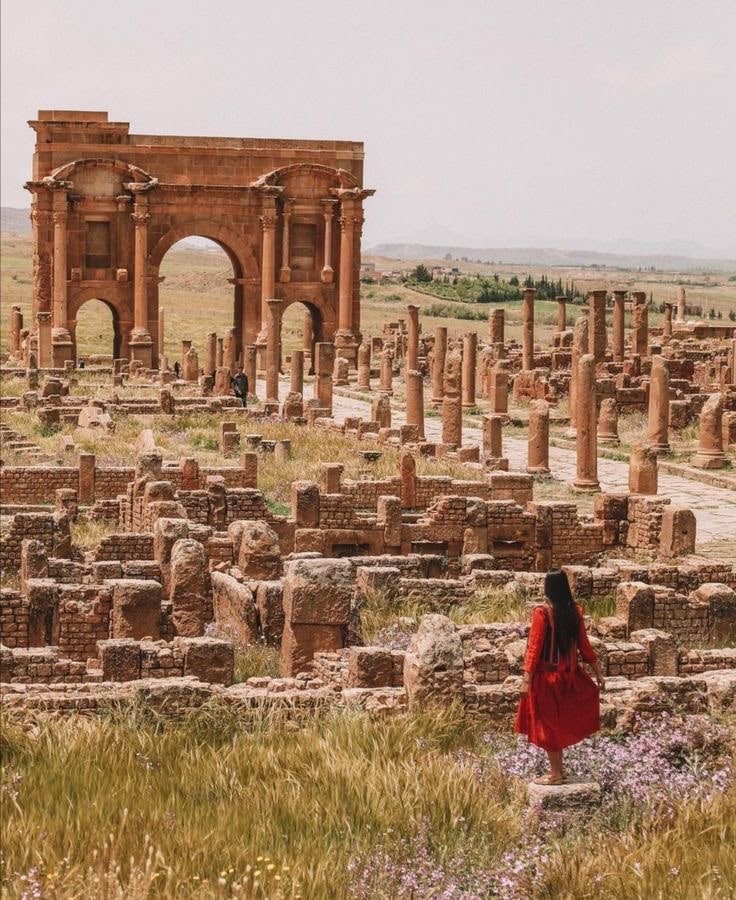 Day 7 · Roman Algeria
Timgad
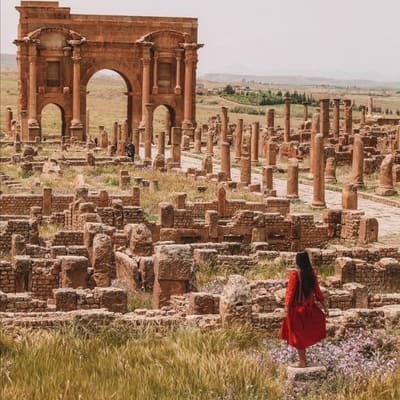
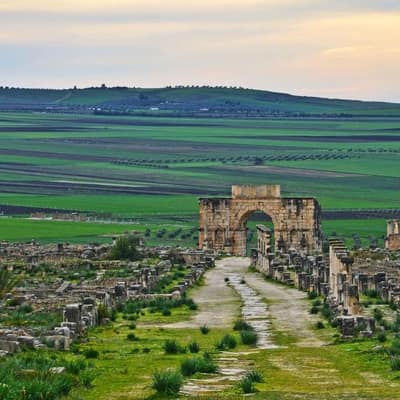
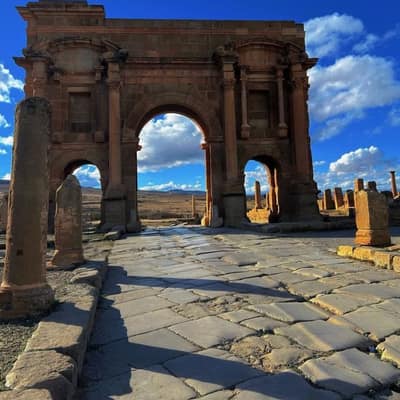
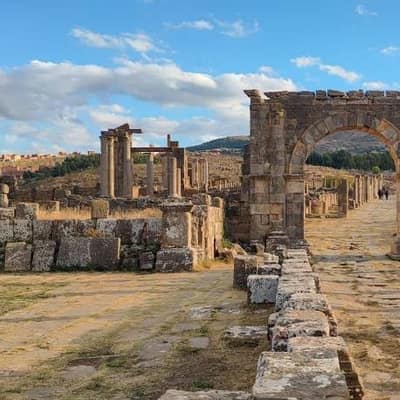
A full-day excursion to Timgad, the Roman city Trajan founded for army veterans and the sand preserved almost intact: the Arch of Trajan, the theatre, the forum and capitol, the baths and the grid of streets that made it a textbook of Roman planning.
- Timgad — The "Pompeii of Africa" — a perfect Roman grid, 115 km from Constantine.
- The Arch of Trajan — The three-bay arch standing over the decumanus — the image Timgad is known by worldwide.
- The theatre, forum and baths — A 3,500-seat theatre cut into the slope, the capitol and forum at the centre, and the bath complexes around the grid.
- On to Constantine & the East
-
 Day 8 · Constantine
Constantine → Annaba
Morning drive to Annaba, one of Algeria’s oldest Mediterranean cities: the Basilica of Saint Augustine, the Roman ruins of Hippo Regius, the Seybouse seafront and the corniche, and a lively city centre.
- The Basilica of Saint Augustine — The 19th-century basilica on the hill above the Roman city, holding a relic of Augustine’s arm.
- Hippo Regius — Where Augustine was bishop — the Roman city beneath the basilica.
- The corniche and Cours de la Révolution — Annaba’s seafront drive and the plane-shaded central promenade where the whole city meets in the evening.
-
 On to Algiers & the Central Coast
-
 Day 9 · Constantine → Roman Algeria → Algiers
Annaba → Djémila → Algiers
An early start west along the motorway to Djémila: the forum, basilica, temples, triumphal arch and the mosaic museum of ancient Cuicul, 900 m up on its mountain spur. Then on to Algiers for the evening.
- Djémila — One of the best-preserved Roman cities in the world, and among the most beautifully sited.
- The Arch of Caracalla — The triumphal arch of AD 216 at the edge of Cuicul’s new forum, 900 m up on its mountain spur.
- The Djémila mosaic museum — On-site mosaics among the richest in the Roman world, kept beside the houses they were lifted from.
-
 Day 10 · Algiers
Algiers in full
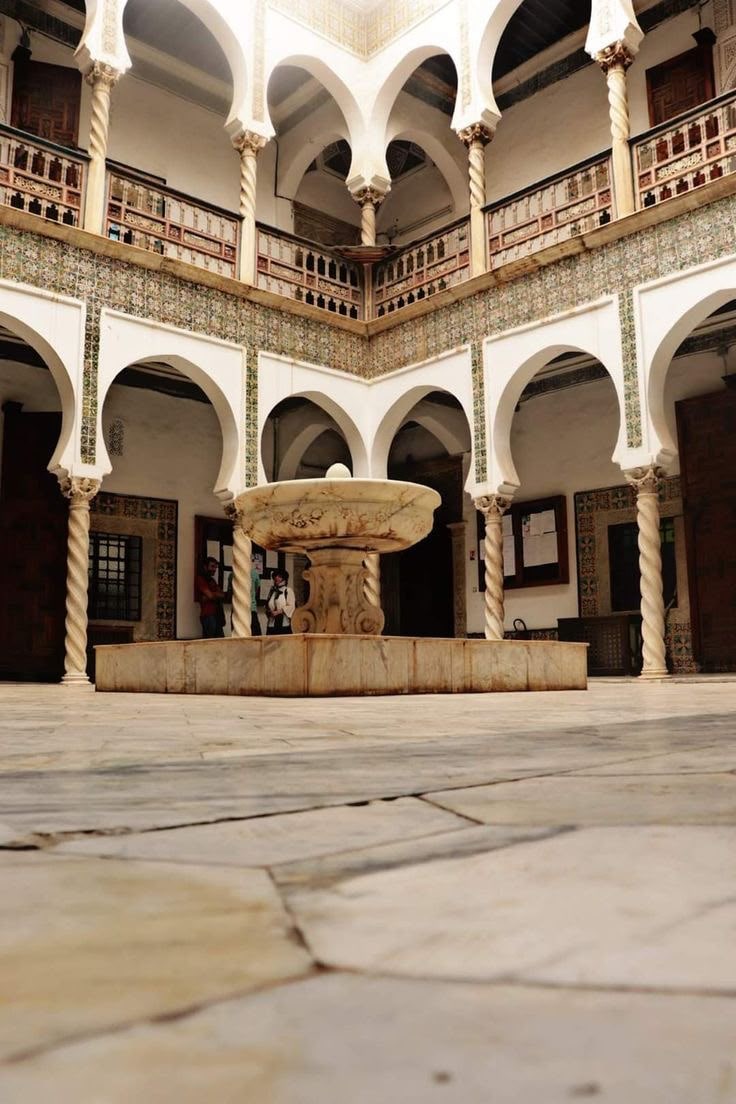
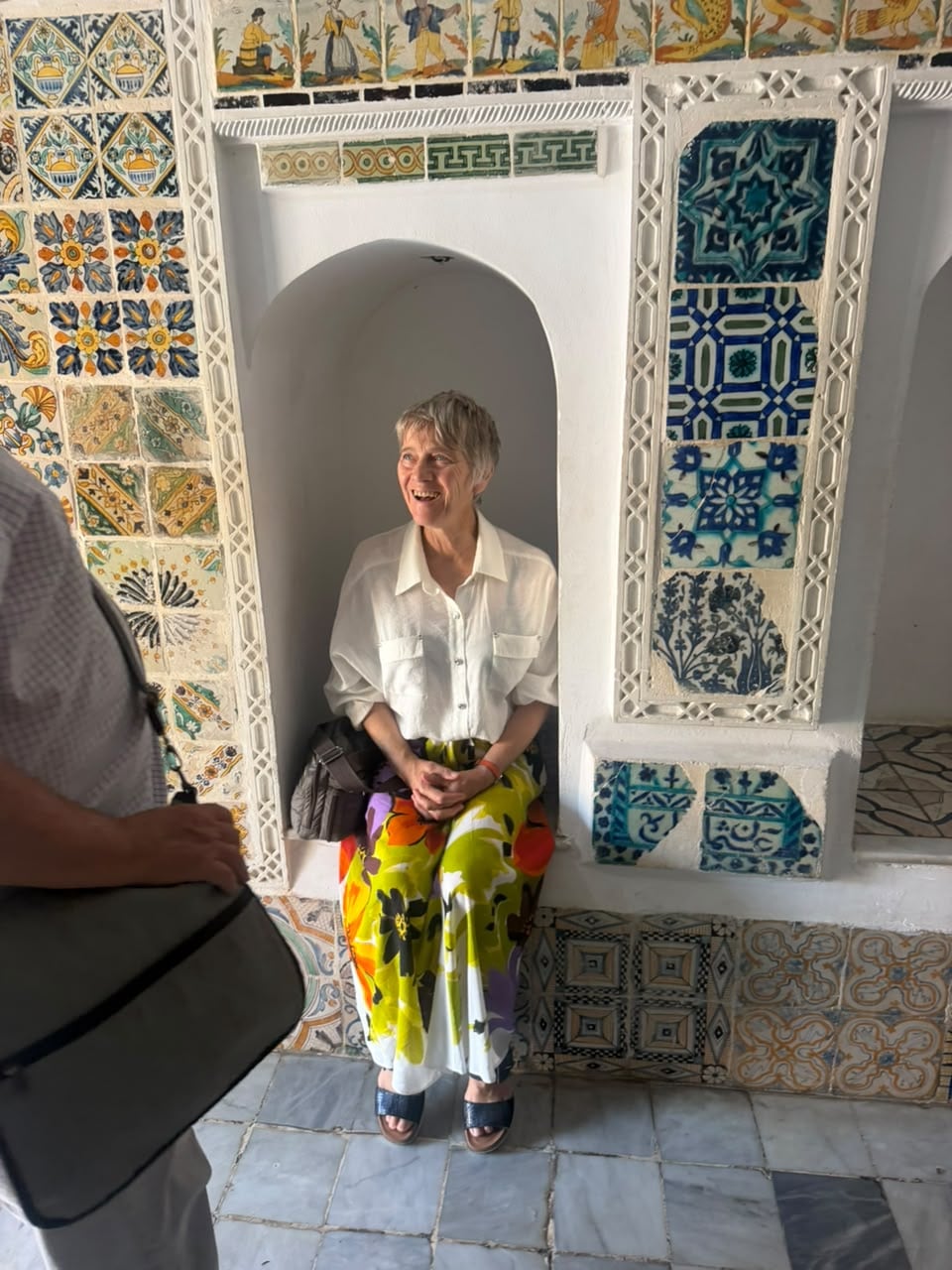
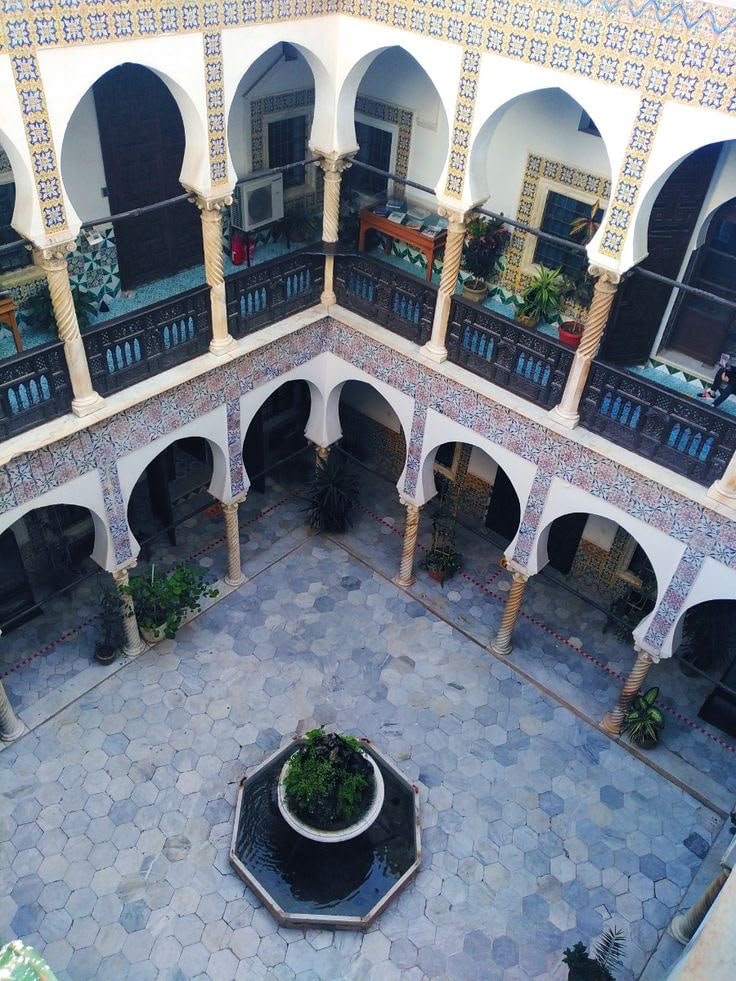
A full day in the capital: the UNESCO-listed Casbah, the Bardo National Museum, the basilica of Notre Dame d’Afrique, the Maqam Echahid and the panoramic viewpoints over the Bay of Algiers.
- The Casbah — The Ottoman citadel above the bay — stepped lanes, courtyards and rooftops.
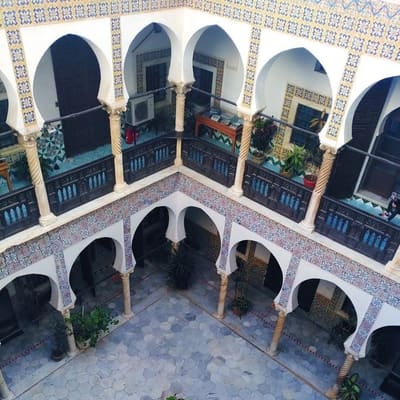
- The Bardo National Museum — Prehistory and ethnography in a Moorish villa — Saharan rock-art casts, silver jewellery and everyday Algeria.
- Notre-Dame d’Afrique and the Maqam Echahid — The basilica on its cliff above Bab El Oued, and the three concrete palm-fronds of the Martyrs’ Memorial over the bay.
-
 On to The M’Zab — Ghardaïa & Its Five Towns
-
 Day 11 · Roman Algeria → The M’Zab
Tipaza & Cherchell → night flight to Ghardaïa
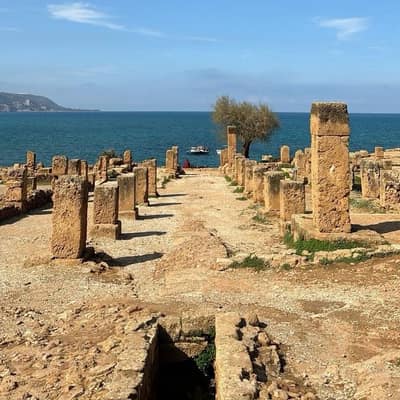
West along the coast to the Roman site of Tipaza, the Royal Mausoleum of Mauretania and the archaeological museum at Cherchell. Back to Algiers for dinner, then the airport.
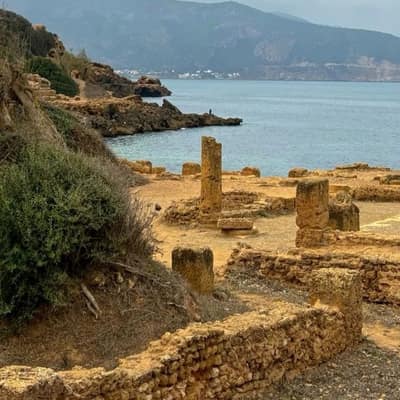
- Tipaza — A Roman port city spread along the sea, where Camus walked among the ruins.
- The Royal Mausoleum of Mauretania — A great stone drum on the hill above the sea — the tomb of Juba II and Cleopatra Selene, daughter of Cleopatra of Egypt.
- The Cherchell Archaeological Museum — Ancient Caesarea’s collection of Roman and Greek mosaics and statuary, among Algeria’s finest.
Direct night flight Algiers → Ghardaïa.
-
 Day 12 · The M’Zab
The M’Zab Valley
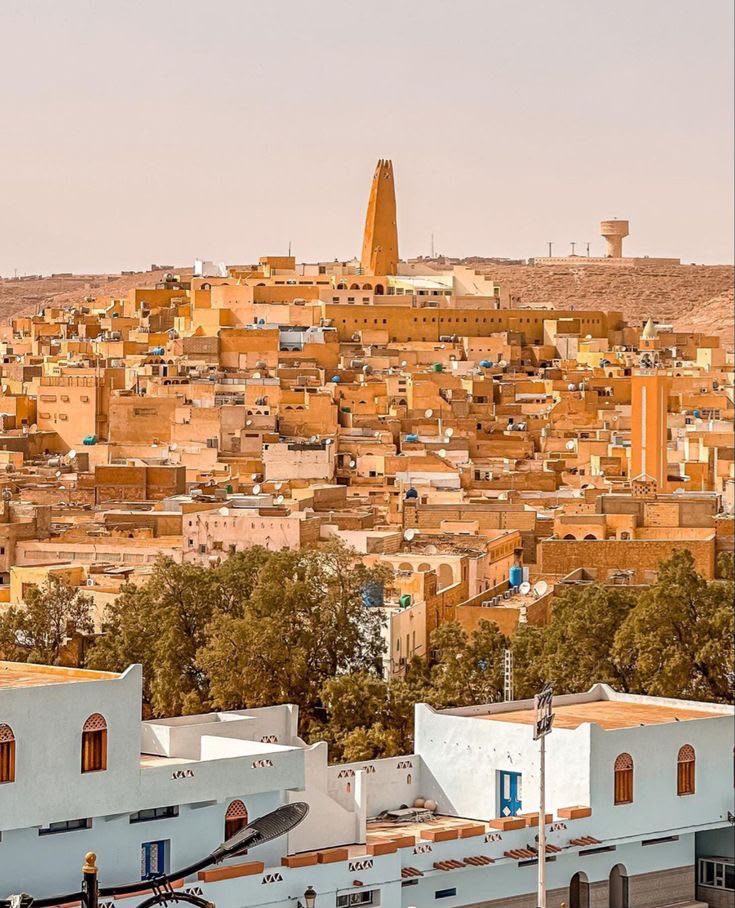
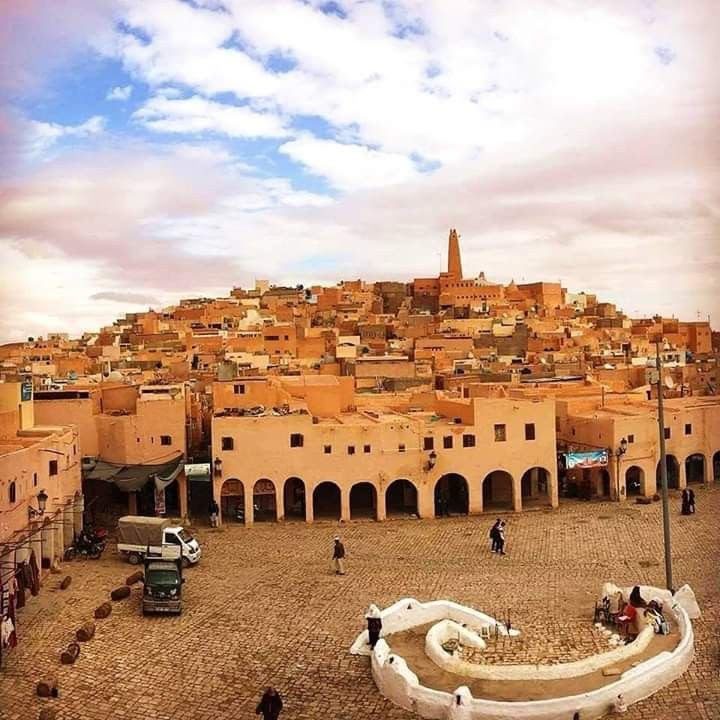
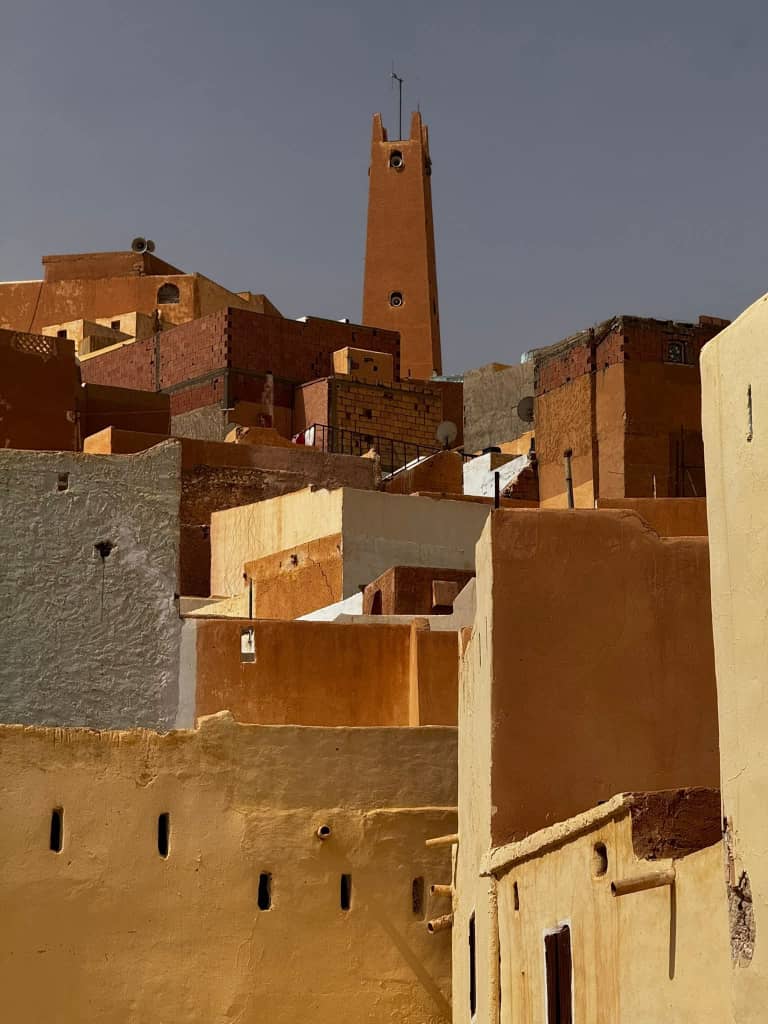
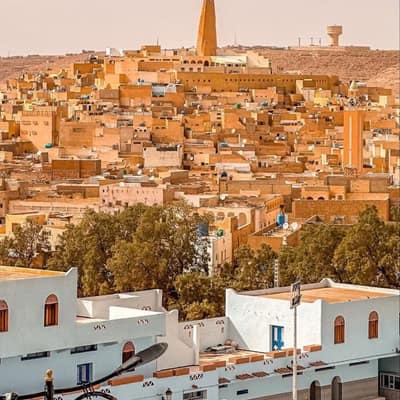
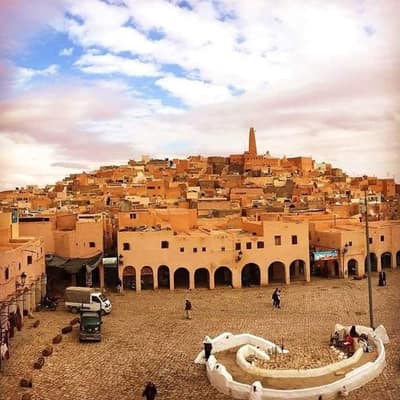
A full day among the five fortified ksour of the M’Zab: Ghardaïa, Beni Isguen, Melika, Bounoura and El Atteuf, with the traditional market and the Mozabite architecture whose logic fascinated Le Corbusier.
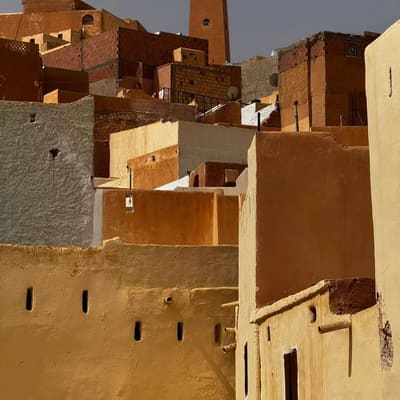
- Ghardaïa’s market and ksar — The arcaded market square at the foot of the main town, and the tiered houses climbing to the minaret above it.
- Beni Isguen — The walled holy city of the Ibadi Mozabites.
- El Atteuf — The oldest of the five towns.
-
 Day 13 · Algiers → The M’Zab
The Sebseb dunes → evening flight to Algiers
A morning excursion south to the Sebseb dunes — a last taste of the great Sahara — then back to Ghardaïa. Farewell dinner of traditional Algerian cooking before the evening flight north.
- The road south through the hamada — The stone desert between Ghardaïa and the sand — the transition almost no visitor sees.
- Sebseb — Dunes 90 km south of Ghardaïa, and the trip’s last desert horizon.
- A farewell dinner in Ghardaïa — Traditional Algerian cooking on the last night, before the evening flight north.
Direct evening flight Ghardaïa → Algiers.
- On to Algiers & the Central Coast
-
 Day 14 · Algiers
Departure
Breakfast, a free morning for anything missed or any last shopping, then the private transfer to Houari Boumediene Airport.
- A free morning in Algiers — Whatever the fortnight missed — the Jardin d’Essai, the Ketchaoua Mosque, or simply the seafront.
- Last shopping — Kabyle silver, Tuareg leather, Deglet Nour dates and pastries, on Rue Didouche Mourad or in the Casbah workshops.
- Houari Boumediene Airport — The private transfer out and assistance through check-in for your international flight.
A departure day: timing follows your international flight.
What's included
- All 4 domestic flights (Air Algérie, economy, all direct) with taxes
- 13 nights’ accommodation, twin/double sharing
- Daily breakfast throughout
- Full board during the Djanet/Sahara expedition and the Ghardaïa segment
- All transfers and touring in private air-conditioned vehicles
- 4×4 vehicles in the Tassili n’Ajjer
- English-speaking national guide throughout; licensed Tuareg guides in Djanet
- National park permits and all listed site and museum entrance fees
- Full desert camping equipment and a dedicated expedition cook
- Visa support / invitation letter documentation
- Bottled water during all excursions
Not included
- International flights to and from Algiers
- Algerian visa fee
- Lunches and dinners not specified; drinks other than water
- Tips for guides, drivers and camp crew
- Travel and medical insurance (required — proof before departure)
- Personal expenses; camera or drone permits where applicable
- Single-room supplement; early check-in or late check-out unless stated
Good to know
- January: Best
- February: Best
- March: Best
- April: Best
- May
- June
- July
- August
- September
- October: Best
- November: Best
- December: Best
- Best season
- October–April (the Saharan leg needs the cool season)
- Pace
- Full but not rushed — three-night bases in Constantine and Algiers
- Nights
- 11 in hotels, 2 in desert camp during the Tadrart expedition
- Flights
- 4 direct domestic flights included, with taxes
- Group
- Priced on a party of 4 sharing twin/double
- Guide
- English-speaking national guide throughout, Tuareg guides in Djanet
Gallery

Travellers on this tour
All our reviews on Google → · Travelled with us? Leave a review
Where you'll be
Starts in Algiers. This itinerary covers algiers, djanet, constantine, batna timgad, annaba, djemila, tipaza, ghardaia.
- Algiers
- Djanet
- Constantine
- Timgad
- Annaba
- Djémila
- Tipaza
- Ghardaïa
Continue exploring
States on this route: algiersdjanetconstantineannabatipazaghardaia
You may also like


Browse all tours, destinations, regions and experiences.
Tour FAQ
Are the domestic flights really all direct?
Yes. The itinerary is deliberately sequenced around Air Algérie’s scheduled direct services — including the once-weekly Djanet → Constantine flight — so there are no transits and no connections. If the winter timetable shifts, we re-accommodate the programme at no extra cost and keep every site.
How much of this is desert?
Four days, days two to five, in the Tassili n’Ajjer with two nights of wild camping in the Tadrart Rouge — a genuine expedition rather than a dune excursion. The rest is Roman, Ottoman and Mozabite Algeria, with a final Saharan afternoon at the Sebseb dunes.
Is fourteen days too long?
It is what the country needs if you want both the Roman east and the deep Sahara without a forced march. There are three-night bases in Constantine and Algiers and two in Ghardaïa, so the pace is full rather than frantic.
What is the price based on?
A party of four travelling together, sharing twin or double rooms, and it covers everything under Inclusions — including all four domestic flights. Tell us your group size and dates and we confirm your exact per-person price in writing.
When should we go?
October to April. The Saharan leg needs the cool season, and it is also when the Roman sites are most comfortable to walk.
Book this trip
From €1850 per person · 14 days · 13 nights · Algeria Grand Discovery — 14 Days, Coast to Sahara. Send your dates and group below and we’ll confirm availability, permits and flights — usually within a few hours.
How booking works
- Request — send the form (or WhatsApp). Your dates are held free for 72 hours; no payment at this stage.
- We confirm — availability, permits, domestic flights and your final price, by email or WhatsApp.
- A 20% deposit secures it — by bank transfer, card or PayPal (we send a secure link); the balance is paid on arrival in Algeria. The price we confirm is locked.
If your visa is refused, we refund everything you paid us. Book 60+ days ahead and 5% comes off. Prefer to talk first? Message us on WhatsApp or email hello@algeriacompass.com.
Your price includes
- All 4 domestic flights (Air Algérie, economy, all direct) with taxes
- 13 nights’ accommodation, twin/double sharing
- Daily breakfast throughout
- Full board during the Djanet/Sahara expedition and the Ghardaïa segment
- All transfers and touring in private air-conditioned vehicles
Not included
- International flights to and from Algiers
- Algerian visa fee
- Lunches and dinners not specified; drinks other than water
- Tips for guides, drivers and camp crew
Your booking request
Thank you — your request is on its way.
We've emailed your details to our team and will reply within a few hours. Prefer to chat now? Message us on WhatsApp.