Why visit Ghardaïa
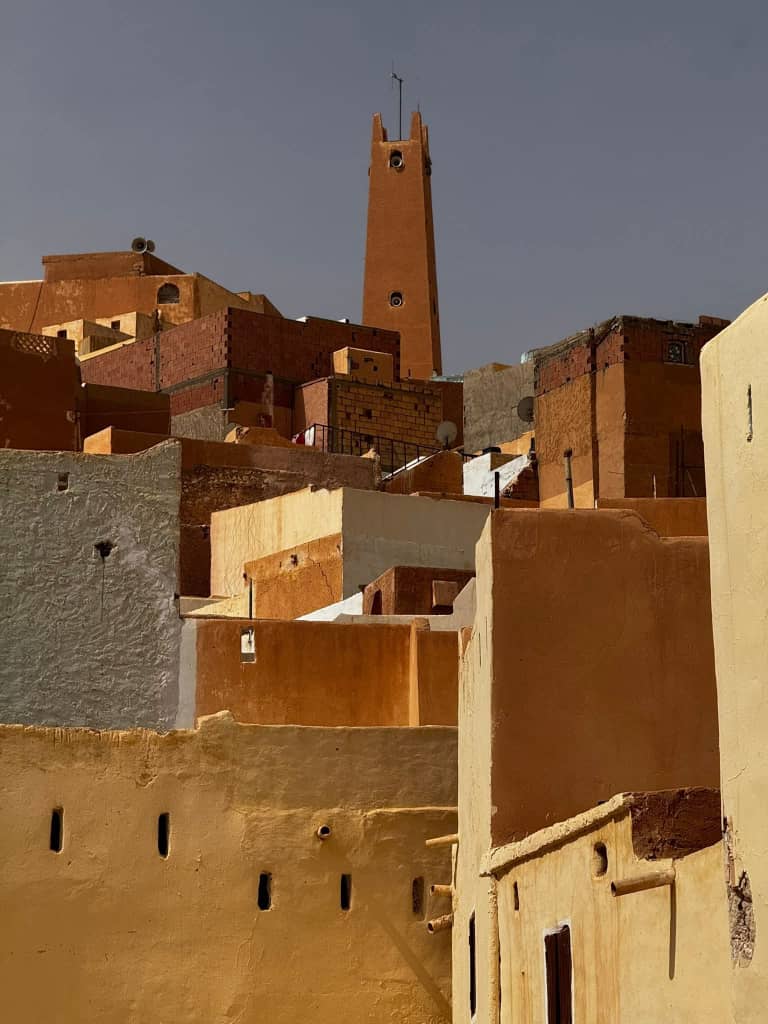
Drive south from the High Plateaus and the land empties into stone and sand — then a city climbs out of a dry valley in tight concentric rings, crowned by a pointed minaret. This is Ghardaïa, the largest of the five towns of the M’Zab Valley and the practical base for visiting it. This page covers planning the trip: how to get there, when to go, how long to stay and the etiquette that makes the valley open up. For the M’Zab’s UNESCO heritage, its Ibadi Mozabite culture and the design that inspired Le Corbusier, see the M’Zab Valley destination guide.
Getting there & around
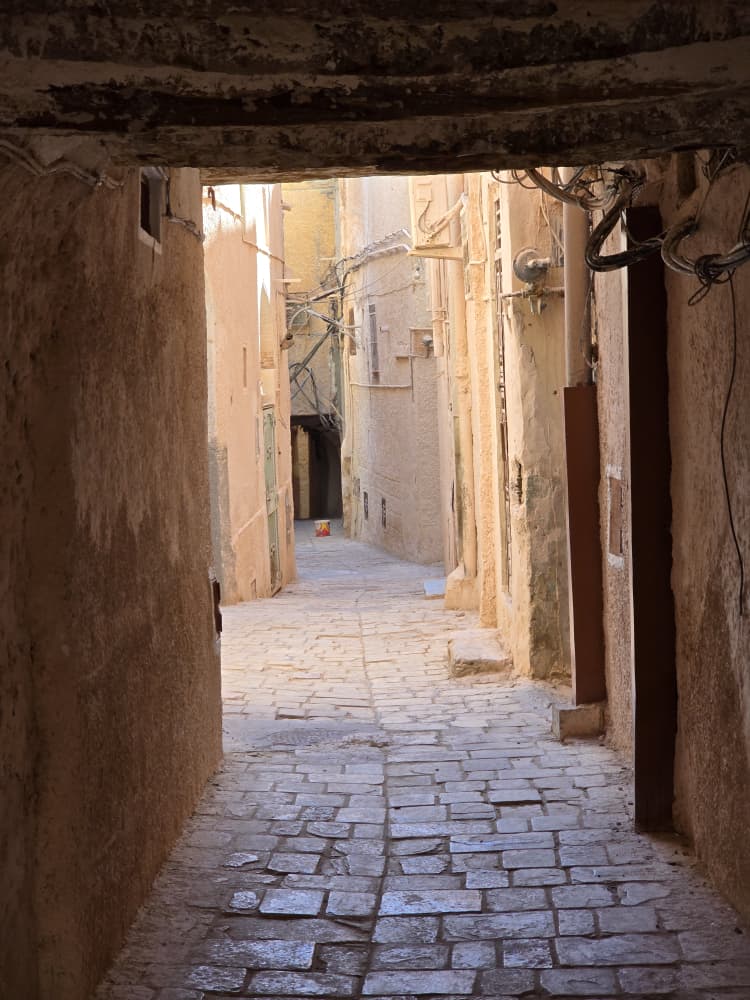
Ghardaïa has an airport (Noumérat – Moufdi Zakaria) with domestic flights — about an hour from Algiers, the easiest way in; by road it’s roughly 600 km, 7–8 hours. The five towns are close together and best explored on foot with a local guide, with short drives between them. A guide is not just helpful here but, in the holy town of Beni Isguen, required.
When to go
October to April, when daytime temperatures are comfortable for walking the towns and palm groves and for the markets. June to August is intensely hot and not recommended for sightseeing.
How many days & itineraries
Two days suits the valley:
- Day 1: explore Ghardaïa — the arcaded market square and old town in the morning, then a panoramic viewpoint over the pentapolis at sunset.
- Day 2: visit Beni Isguen with a guide (timing it for the afternoon auction if you can), then Melika and El Atteuf for quieter lanes and valley views, with time to shop for crafts.
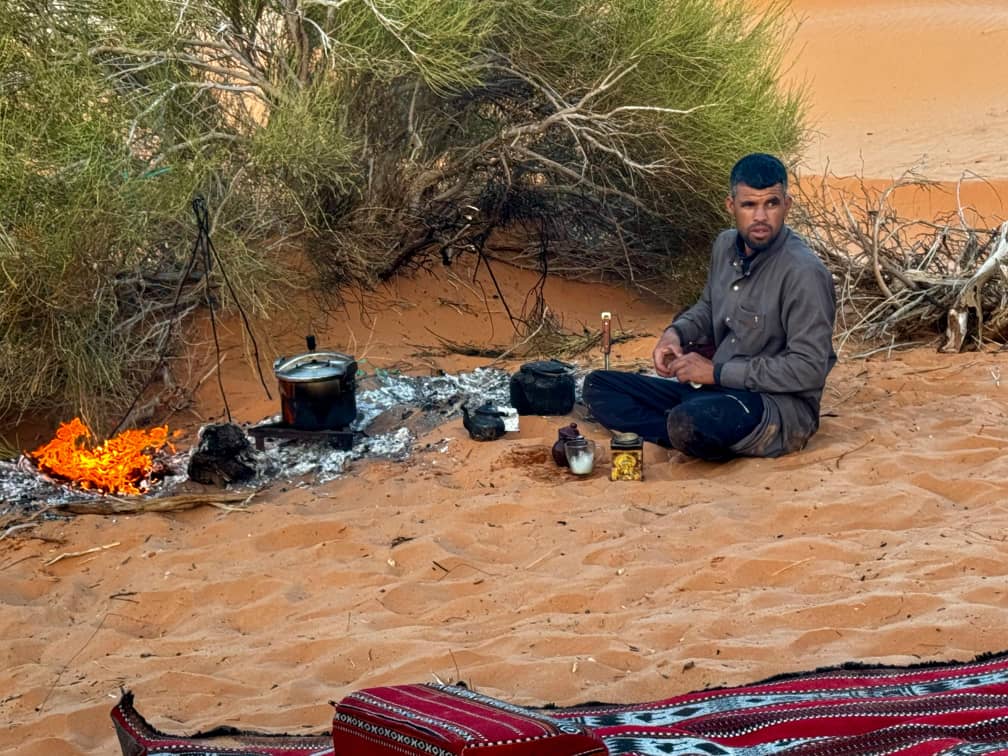
- As part of a Sahara route: the M’Zab makes a natural first or last stop on a deeper desert journey south toward Timimoun, El Menia (El Goléa) or Ouargla — best planned as a guided multi-day route.
The towns at a glance
The valley is a pentapolis — Ghardaïa, Beni Isguen, Melika, Bounoura and El Atteuf — each a hilltop town around a fortified mosque, ringed by palm groves. The full story of how and why they were built this way is on the M’Zab Valley destination guide; for planning, the key point is that they sit close together and are visited together over a couple of days.
Crafts & the market
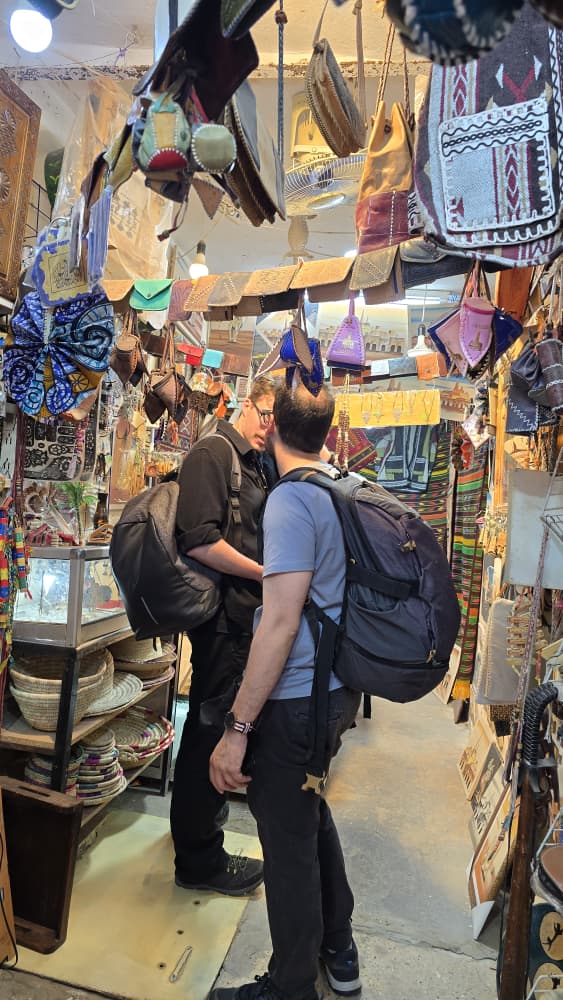
The M’Zab is one of the best places in Algeria to buy handicrafts: hand-knotted carpets with bold geometric designs, brass and copperware, and pottery in turquoise and ochre. Ghardaïa’s arcaded market square is the place to do it — liveliest in the morning, and bargaining is part of the ritual. Bring cash.
Where to stay
Stay in or near Ghardaïa, which has the valley’s main accommodation and easy access to the market and the other towns. We arrange vetted accommodation and licensed local guides as part of a planned itinerary.
Etiquette & responsible travel
This is a deeply religious, conservative region, so dress modestly and follow local norms closely. For Beni Isguen, a local guide is required and photography is restricted — always ask first, and accept where it’s simply not allowed. Visit the market in the morning, bargain politely, and treat the towns as living communities rather than a film set.
Practical tips
- Hire a licensed local guide — essential for Beni Isguen, and it transforms the whole valley.
- Visit the market early, and time Beni Isguen for the afternoon auction if you can.
- Bring cash for crafts; respect photography rules absolutely — when in doubt, don’t.
- Combine the M’Zab with a deeper Sahara route for the full desert experience.