The M'Zab Valley: The Desert Cities That Astonished Le Corbusier
May 2026 · 7 min read
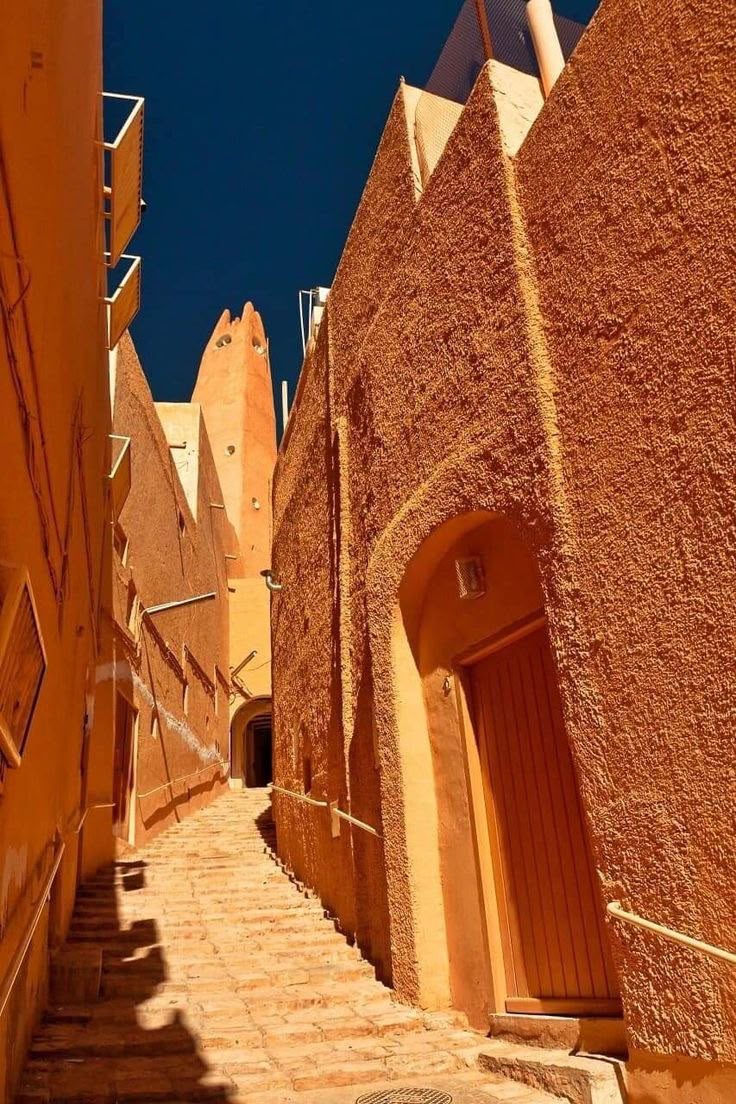
The M'Zab Valley is a group of five fortified oasis towns in the Algerian Sahara, founded by the Ibadi Mozabites around the 11th century and inscribed by UNESCO in 1982. It is famous for its pyramidal urban planning, which influenced modern architects including Le Corbusier.
Drive five hours south of Algiers and the landscape empties into rock and sand — then a city climbs out of a dry riverbed in tight concentric rings, crowned by a pointed minaret. This is Ghardaïa, largest of the five towns of the M’Zab Valley.
Who built the M’Zab
The towns were founded around the 11th century by the Mozabites, followers of Ibadi Islam who withdrew into the Sahara to live by strict communal rules. Each town sits on a hill around a fortified mosque whose minaret doubled as a watchtower, houses spiralling down around it.
The design that influenced Le Corbusier
Every house is a near-identical cube, sized so none blocks another’s light or air. It is egalitarian, climate-adapted and astonishingly modern. Le Corbusier studied the M’Zab repeatedly and borrowed from its forms.
Visiting today
Ghardaïa’s market is a riot of carpets, brass and turquoise pottery. The most conservative town, Beni Isguen, requires a local guide and restricts photography of residents.
Key facts
| Type | Fortified oasis pentapolis (5 towns) |
| Founded | ~11th century, by the Mozabites |
| UNESCO | Inscribed 1982 |
| Largest town | Ghardaïa |
| Best season | October–April |


